Garcinia cambogia has become one of the most talked-about supplements in the weight loss industry, with bold promises appearing across health stores and online retailers. This tropical fruit, native to Southeast Asia and India, contains a compound called hydroxycitric acid (HCA) that manufacturers claim can accelerate fat loss, suppress appetite, and transform your body composition. Yet beneath the marketing hype lies a more complex reality, one that highlights the fundamental challenge of relying on external solutions for lasting weight management. Understanding what garcinia actually does-and more importantly, what it doesn't do-can help you make informed decisions about your health journey.
The Origins and Traditional Uses of Garcinia
Garcinia cambogia, also known as Malabar tamarind, has been used for centuries in traditional cooking and medicine throughout South and Southeast Asia. The fruit resembles a small pumpkin with a yellowish or greenish color, and its rind has been traditionally used to add a sour flavor to curries and preserve fish.
In Ayurvedic medicine, garcinia has been employed to address digestive issues and rheumatism. However, its use as a weight loss supplement is a relatively modern development that gained significant traction in the late 1990s and experienced renewed popularity in the 2010s.
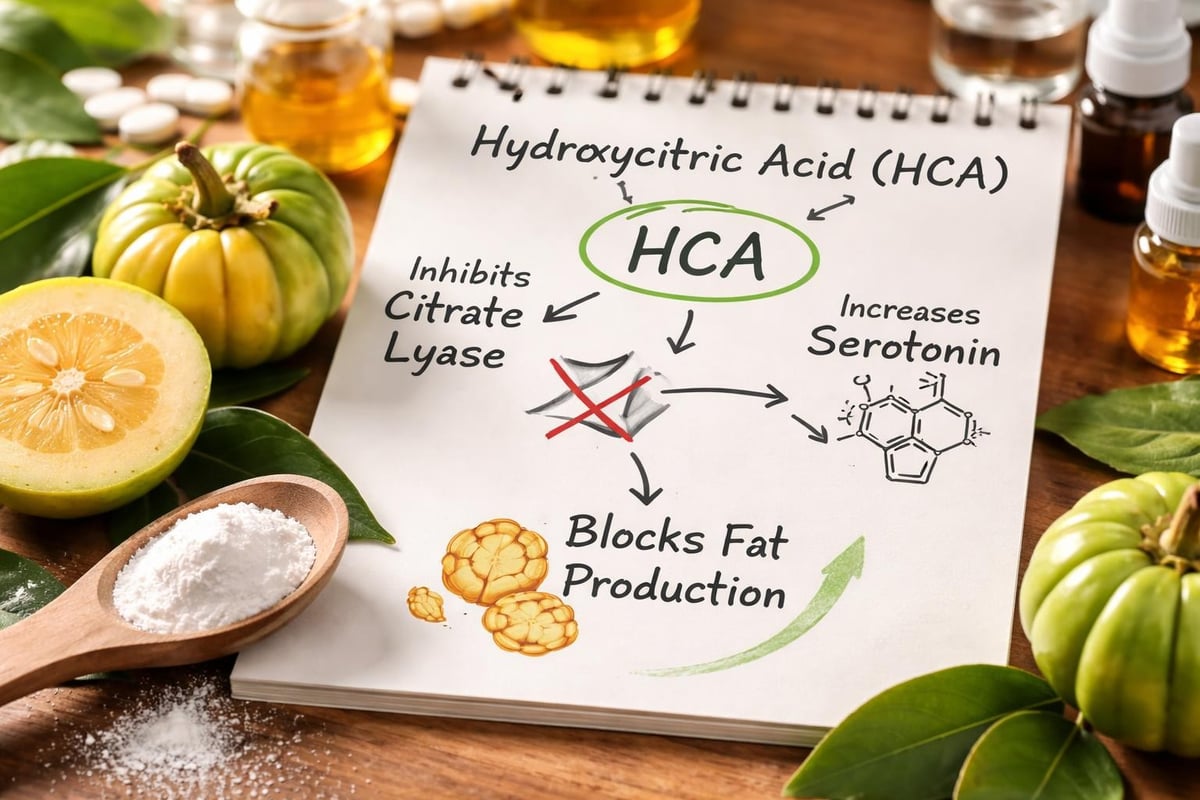
The active compound that captured the attention of researchers and supplement manufacturers is hydroxycitric acid (HCA), found primarily in the fruit's rind. This substance supposedly works through two mechanisms:
- Inhibiting citrate lyase, an enzyme your body uses to make fat
- Increasing serotonin levels in the brain, potentially reducing appetite
- Blocking the storage of dietary fat in fat cells
Despite these theoretical mechanisms, the translation from laboratory findings to real-world weight loss results has proven far more challenging than initial enthusiasm suggested.
What Clinical Research Actually Reveals
The scientific evidence surrounding garcinia for weight loss is considerably less impressive than promotional materials suggest. Multiple systematic reviews have found minimal to no significant weight loss benefit from garcinia supplementation compared to placebo groups.
A comprehensive meta-analysis published in the Journal of Obesity examined multiple randomized controlled trials and found that while garcinia produced statistically significant weight loss compared to placebo, the actual difference was remarkably small-typically less than two pounds over several weeks. More concerning, the quality of many studies was poor, with small sample sizes, short durations, and inadequate control of confounding variables.
The Disconnect Between Laboratory and Real Life
Laboratory studies on isolated cells and animal models showed promise for HCA's fat-blocking mechanisms. Rodent studies demonstrated that high doses of garcinia extract could reduce weight gain when animals were fed high-fat diets. Yet these results failed to translate meaningfully to human subjects in controlled clinical trials.
Several factors explain this disconnect:
- Bioavailability issues: HCA from oral supplements may not be well absorbed in the human digestive system
- Dosage problems: The amounts that showed effects in animal studies often exceed what's safe or practical for humans
- Complex human metabolism: Weight regulation in humans involves intricate hormonal, psychological, and behavioral systems that a single compound cannot override
- Study design limitations: Many human trials were too short to detect meaningful or sustainable changes
The research suggests that if garcinia has any effect at all, it's modest at best and certainly not the dramatic transformation that marketing campaigns promise.
Safety Concerns and Potential Side Effects
Beyond the question of effectiveness lies an equally important consideration: safety. While many people tolerate garcinia supplements without serious issues, documented cases of liver injury have been associated with garcinia-containing products.
Common side effects reported include:
- Digestive discomfort, nausea, and diarrhea
- Headaches and dizziness
- Dry mouth
- Skin rashes in some individuals
More serious concerns involve potential liver toxicity. The LiverTox database maintained by the National Institutes of Health documents several cases of acute liver injury associated with garcinia supplements, some requiring hospitalization. While it's difficult to establish definitive causation, the pattern of injury-typically occurring within weeks to months of starting supplementation and improving after discontinuation-raises legitimate safety questions.
Additionally, garcinia may interact with medications including:
- Diabetes medications (potentially causing dangerously low blood sugar)
- Antidepressants, particularly SSRIs (due to serotonin effects)
- Statins and other cholesterol medications
- Iron supplements (garcinia may reduce absorption)
The potential risks, combined with the minimal evidence for benefits, create an unfavorable risk-benefit profile for many individuals considering garcinia supplementation.

Why Quick Fixes Don't Address Root Causes
The appeal of garcinia-and supplements like it-reflects a deeper desire for effortless solutions to complex challenges. Weight management isn't simply a matter of blocking an enzyme or slightly increasing serotonin. It's intricately connected to your brain's reward systems, stress responses, emotional regulation, and learned behavioral patterns.
When you rely on weight loss supplements, you're attempting to override your brain's programming with an external substance rather than addressing why your brain drives certain eating behaviors in the first place. This approach fundamentally misunderstands how lasting change occurs.
The Neuroscience of Eating Behavior
Your eating patterns are controlled by complex neural circuits involving:
- The hypothalamus, which regulates hunger and satiety signals
- The prefrontal cortex, responsible for decision-making and impulse control
- The limbic system, which processes emotions and rewards
- The insula, which integrates body sensations with emotional states
These systems don't simply respond to the presence or absence of specific compounds in your bloodstream. They're shaped by years of conditioning, emotional associations, stress responses, and subconscious programming. A garcinia supplement cannot rewire these deep-seated patterns.
Consider what actually happens when someone takes garcinia:
- They maintain the same thought patterns around food
- Their stress-eating triggers remain unchanged
- Their subconscious associations between food and comfort persist
- Their automatic habits around meal timing and portions stay intact
Even if garcinia produced a modest metabolic effect, these unchanged patterns would ultimately determine long-term outcomes. This explains why supplement-based approaches typically fail to produce lasting results, and why changing your brain through neuroplasticity offers a more effective path.
Marketing Versus Reality in the Supplement Industry
The garcinia phenomenon illustrates broader issues within the supplement industry. Unlike prescription medications, dietary supplements don't require FDA approval before reaching consumers. Manufacturers can make structure-function claims without proving efficacy, as long as they include disclaimers about FDA evaluation.
This regulatory environment creates fertile ground for exaggerated marketing. You've likely encountered garcinia advertisements featuring dramatic before-and-after photos, testimonials from "satisfied customers," and references to "clinical studies" without context about their quality or actual findings.
Red flags in garcinia marketing include:
- Claims of "effortless" or "automatic" weight loss without lifestyle changes
- Promises of specific pound-per-week loss rates
- Celebrity endorsements without disclosure of compensation
- References to proprietary blends that obscure actual HCA content
- Pressure tactics creating urgency to purchase immediately
The Federal Trade Commission has taken action against several garcinia marketers for deceptive advertising, but new products continually emerge with similar claims. Understanding these tactics helps you evaluate whether a product offers genuine value or simply exploits hope and desperation.
Alternative Approaches That Target the Brain
If garcinia doesn't offer a reliable solution, what does work for sustainable weight management? The answer lies not in blocking enzymes or manipulating single neurotransmitters, but in comprehensively reprogramming the neural patterns that drive your eating behavior.
Neuroscience research reveals that your brain is remarkably plastic-capable of forming new connections and pathways throughout your life. By leveraging this neuroplasticity through targeted interventions, you can fundamentally change your relationship with food at the subconscious level.
Evidence-Based Brain-Changing Approaches
Behavioral Psychology Techniques
Unlike garcinia supplements that work (or don't work) through purely biochemical mechanisms, behavioral interventions reshape the cognitive and emotional processes governing your choices. These include:
- Cognitive restructuring to identify and modify thought patterns around food
- Exposure therapy to reduce anxiety-driven eating
- Contingency management to reinforce healthy behaviors
- Mindfulness training to increase awareness of hunger and satiety cues
Self-Hypnosis and Guided Imagery
Research demonstrates that hypnotic interventions can effectively modify eating behaviors by accessing and reprogramming subconscious patterns. Rather than relying on willpower-which depletes quickly under stress-these approaches make healthy choices feel natural and automatic.
Neurofeedback and Mental Rehearsal
By repeatedly visualizing and mentally practicing desired behaviors, you strengthen the neural pathways associated with those actions. This mental rehearsal creates actual structural changes in your brain, making the imagined behaviors more likely to occur automatically in real situations.
These brain-based approaches require consistent practice, typically just 10-15 minutes daily, but they address the actual source of eating behaviors rather than attempting superficial biochemical manipulation. When you change your brain's programming, your choices naturally align with your goals without constant conscious effort or restriction.

Understanding Why Diets and Supplements Both Fail
Both restrictive diets and supplements like garcinia share a fundamental flaw: they attempt to impose external control rather than developing internal regulation. When you diet, you override your body's natural signals with arbitrary rules. When you take supplements, you try to chemically force a result your brain hasn't agreed to.
Either approach creates an adversarial relationship between your conscious intentions and your subconscious drives. Your willpower struggles against deeply ingrained patterns, stress responses, and emotional needs. This internal conflict is exhausting and ultimately unsustainable.
The common failure pattern:
- Initial enthusiasm and strong adherence (whether to diet rules or supplement regimens)
- Gradual depletion of willpower and decision fatigue
- Stress or emotional challenges that trigger old patterns
- Feelings of failure and guilt that reinforce negative self-perception
- Return to baseline behaviors, often with additional weight gain
This cycle repeats across different approaches-low-carb diets, calorie counting, meal replacements, garcinia supplements, or countless other marketed solutions. The specific method changes, but the underlying dynamic remains the same: external control eventually fails because it doesn't address internal programming.
What Actually Works for Lasting Change
Sustainable weight management requires addressing the subconscious programming that drives your eating behaviors. This means working with your brain rather than against it, creating conditions where healthy choices emerge naturally from your genuine desires rather than forced compliance.
The most effective approaches combine several evidence-based elements:
- Subconscious reprogramming through repeated exposure to guided sessions that reshape automatic responses
- Stress management techniques that provide alternatives to emotional eating
- Mindful awareness practices that reconnect you with your body's actual needs
- Identity transformation that shifts how you fundamentally see yourself and your relationship with food
These elements work synergistically to create comprehensive change. You're not just modifying surface behaviors; you're transforming the underlying neural architecture that generates those behaviors automatically.
Research on habit formation reveals that behaviors become automatic through repetition within consistent contexts. By deliberately practicing new mental patterns-even just in guided visualization-you activate the same neural circuits that would engage during actual behavior. Over time, these circuits strengthen and become your new default.
This process doesn't require extreme willpower or constant vigilance. Instead, it builds new automatic responses that feel natural and effortless. You're not fighting cravings; you're genuinely experiencing reduced desire for foods that don't serve you. You're not forcing yourself to eat mindfully; you're naturally more aware and present during meals.
The Role of Individual Biochemistry
While garcinia's universal promises ignore individual variation, it's true that biochemical factors influence weight management. However, these factors are far more nuanced than a single supplement can address.
Your metabolism, hormone balance, gut microbiome, inflammatory status, stress response, and sleep quality all affect how your body processes and stores energy. Rather than trying to override these systems with garcinia or similar compounds, effective approaches work to optimize them through comprehensive lifestyle factors.
For some individuals, underlying medical conditions like hypothyroidism, polycystic ovary syndrome, or insulin resistance significantly impact weight. These conditions require proper medical diagnosis and treatment, not garcinia supplementation.
Even for people without diagnosed conditions, biochemical optimization involves:
- Adequate sleep to regulate hunger hormones
- Stress reduction to minimize cortisol-driven fat storage
- Nutrient-dense foods that support metabolic function
- Movement that enhances insulin sensitivity
- Hydration that supports cellular processes
These foundational elements create conditions where your body naturally maintains healthy weight. They work synergistically with brain-based approaches, since stress, sleep deprivation, and nutrient deficiencies all impair the prefrontal cortex's ability to regulate impulses and make long-term decisions.
Moving Beyond the Supplement Mentality
The appeal of garcinia-and the broader supplement industry-reflects cultural conditioning around quick fixes and passive solutions. We've been taught to seek external interventions rather than develop internal capacities, to consume products rather than cultivate practices.
This mentality extends beyond weight loss to virtually every area of health and personal development. There's a pill, powder, or program marketed for every challenge, promising to solve your problems without requiring genuine change from you.
Breaking free from this pattern means recognizing that lasting transformation requires active participation, not passive consumption. You cannot purchase your way to sustainable weight management, whether through garcinia supplements, meal replacement shakes, or the latest trending ingredient.
What you can do is invest time and attention in reprogramming the neural patterns that currently drive your eating behaviors. This investment pays dividends across your entire life, not just in weight management but in stress resilience, emotional regulation, and overall well-being.
The process is remarkably simple-just minutes of daily practice with guided sessions designed to access and reshape your subconscious programming. But simple doesn't mean passive. It requires showing up consistently, trusting the process even when conscious changes aren't immediately visible, and maintaining practice long enough for new neural pathways to solidify.
Integration with Comprehensive Lifestyle Approaches
No single intervention, whether garcinia supplementation or brain-based reprogramming, exists in isolation from the rest of your life. The most effective weight management approaches integrate multiple supportive elements that work together synergistically.
Physical activity serves multiple purposes beyond calorie burning. It enhances neuroplasticity, making your brain more responsive to reprogramming efforts. Exercise also regulates mood, reduces stress, improves sleep quality, and provides non-food sources of pleasure and accomplishment.
Social support significantly influences outcomes. Surrounding yourself with people who support your goals, whether through in-person relationships or online communities, provides accountability, encouragement, and modeling of successful behaviors.
Environmental design makes healthy choices easier. Rather than relying on willpower to resist temptation, you structure your surroundings to align with your intentions-keeping triggering foods out of immediate access while making nutritious options convenient and appealing.
Purpose and meaning beyond weight loss sustain motivation when initial enthusiasm wanes. Connecting your health goals to larger values-being present for loved ones, pursuing activities that matter to you, or embodying your authentic self-provides deeper fuel than appearance-focused objectives.
These elements work together to support the fundamental work of neural reprogramming. They create conditions where your brain's new programming can express itself in real behaviors, where healthy choices become genuinely easier rather than requiring constant effort.
While garcinia supplements promise quick fixes through biochemical mechanisms, the research reveals minimal effectiveness and potential safety concerns. Lasting weight management requires addressing the root cause-your brain's subconscious programming around food, stress, and emotions. Oneleaf offers a neuroscience-based approach that helps you reprogram these patterns in just 10 minutes daily, combining behavioral psychology, self-hypnosis, and proven brain-changing techniques. Instead of fighting your biology with supplements, you'll work with your brain's natural neuroplasticity to make healthy choices feel automatic and effortless, creating results that actually last.