Your midday meal represents more than just fuel-it's a critical decision point that shapes your weight loss journey through both physical nutrition and neurological patterns. When you consistently choose healthy lunches for weight loss, you're not just feeding your body; you're training your brain to recognize and prefer choices that support your goals. This neuroscience-based approach transforms lunch from a mundane routine into a powerful opportunity for lasting change.
Understanding the Brain Science Behind Lunch Choices
The connection between your brain and your lunch plate runs deeper than most people realize. Your subconscious mind drives approximately 95% of your eating decisions, which means willpower alone rarely creates sustainable results. When you understand how neural pathways form around food choices, you can work with your brain rather than against it.
How Your Brain Processes Midday Eating Decisions
Every time you eat lunch, your brain creates and reinforces neural connections. These pathways become highways of habit, making certain choices feel automatic while others require enormous effort. The good news? Neuroplasticity allows you to rewire these patterns through consistent, intentional practice.
Your brain responds to several factors during lunch decisions:
- Blood sugar levels that influence cravings and energy
- Stress hormones that drive comfort food seeking
- Environmental cues that trigger automatic eating patterns
- Emotional states that connect to specific food memories
- Time pressure that activates default decision-making
When you repeatedly choose healthy lunches for weight loss, you strengthen new neural pathways. Over time, these healthier choices become your new default, requiring less conscious effort and willpower.

Essential Components of Weight-Loss-Friendly Lunches
Building healthy lunches for weight loss requires understanding macronutrient balance and how different foods affect both satiety and brain chemistry. The right combination keeps you satisfied while supporting your metabolic and neurological needs.
Protein: The Satisfaction Foundation
Protein serves dual purposes in weight loss lunches. Physically, it provides lasting satiety and supports muscle preservation during caloric adjustments. Neurologically, protein-rich foods trigger the release of peptide YY and GLP-1, hormones that signal fullness to your brain.
Aim for 25-35 grams of protein per lunch:
- Grilled chicken breast (4 oz): 35g protein
- Wild-caught salmon (4 oz): 29g protein
- Greek yogurt (1 cup): 20g protein
- Lentils (1 cup cooked): 18g protein
- Tofu (1 cup): 20g protein
- Eggs (2 large): 12g protein
Fiber-Rich Vegetables and Complex Carbohydrates
Nutritionists emphasize balanced lunch components that include substantial vegetable portions. Fiber slows digestion, stabilizes blood sugar, and feeds beneficial gut bacteria that influence appetite regulation through the gut-brain axis.
High-fiber vegetable choices:
- Leafy greens (spinach, kale, arugula)
- Cruciferous vegetables (broccoli, cauliflower, Brussels sprouts)
- Colorful peppers and tomatoes
- Mushrooms and zucchini
- Cabbage and bok choy
Complex carbohydrates provide sustained energy without blood sugar spikes. Choose quinoa, brown rice, sweet potatoes, or whole grain bread in moderate portions (1/2 to 1 cup cooked).
Healthy Fats for Brain Function and Satiety
Dietary fats support hormone production, nutrient absorption, and cognitive function. They also slow gastric emptying, extending the feeling of fullness between meals.
Include one serving of healthy fats:
- Avocado (1/4 to 1/2 medium)
- Olive oil (1-2 tablespoons)
- Nuts and seeds (1/4 cup)
- Fatty fish (built into protein portion)
Practical Lunch Strategies That Retrain Your Brain
Creating healthy lunches for weight loss becomes easier when you establish systems that reduce decision fatigue and support your neuroscience-based approach to eating.
Meal Preparation and Pattern Recognition
Your brain loves patterns and predictability. When you establish consistent lunch preparation routines, you reduce the cognitive load required for healthy choices. This preservation of mental energy prevents the decision fatigue that often leads to impulsive, less nutritious options.
Weekly preparation strategy:
- Dedicate 2-3 hours on Sunday for batch cooking
- Prepare 3-4 protein sources in various preparations
- Chop and store vegetables in clear containers
- Cook grains and legumes in bulk
- Portion ingredients into grab-and-go combinations
This approach leverages your brain's preference for efficiency. When healthy options require less effort than unhealthy ones, your subconscious naturally guides you toward better choices.

Mindful Eating Techniques for Lunch
The speed and attention you bring to lunch dramatically affects both satisfaction and caloric intake. Research shows that mindful eating activates the prefrontal cortex, strengthening conscious control over automatic eating behaviors. When you eat mindfully during lunch, you create space between stimulus and response.
Practice these mindfulness techniques:
- Take three deep breaths before eating
- Put down utensils between bites
- Chew each bite 20-30 times
- Notice flavors, textures, and temperatures
- Pause halfway through to assess hunger levels
These practices engage your conscious mind, interrupting automatic eating patterns and allowing your satiety signals to reach your brain before overconsumption occurs.
Low-Calorie, High-Satisfaction Lunch Ideas
Creating variety in your healthy lunches for weight loss prevents the monotony that often derails sustainable eating changes. These nutritious lunch recipes demonstrate how diverse options can fit within weight loss parameters.
Power Bowl Combinations
Power bowls offer infinite customization while maintaining consistent nutritional structure. The visual appeal and textural variety satisfy multiple sensory pathways in your brain, enhancing meal satisfaction.
Mediterranean Power Bowl:
- Base: 2 cups mixed greens and arugula
- Protein: 4 oz grilled chicken or chickpeas
- Grains: 1/2 cup quinoa
- Vegetables: cucumber, tomatoes, red onion, bell peppers
- Healthy fat: 1/4 cup hummus and 10 olives
- Dressing: lemon juice and herbs
Asian-Inspired Bowl:
- Base: 2 cups shredded cabbage and carrots
- Protein: 4 oz teriyaki salmon or edamame
- Grains: 1/2 cup brown rice
- Vegetables: snap peas, mushrooms, bok choy
- Healthy fat: 1 tablespoon sesame seeds and avocado
- Dressing: rice vinegar and ginger
Soup and Salad Pairings
The combination of warm soup and crisp salad provides temperature contrast that enhances sensory satisfaction. Soups also trigger stretch receptors in your stomach more effectively than solid foods, sending earlier fullness signals to your brain.
Recommended pairings:
- Vegetable minestrone with Italian chopped salad
- Butternut squash soup with kale and apple salad
- Thai coconut curry soup with cucumber ribbon salad
- Lentil soup with Mediterranean grain salad
Quick preparation methods make these combinations practical for busy schedules. Batch-cook soups on weekends and assemble fresh salads each morning.
Protein-Packed Wraps and Sandwiches
Wraps satisfy the psychological desire for handheld comfort food while delivering substantial nutrition. Choose large collard greens, whole grain tortillas, or lettuce wraps as your vessel.
Turkey and Avocado Wrap:
- 6 oz sliced turkey breast
- 1/4 avocado, sliced
- Mixed greens, tomato, cucumber
- Mustard or Greek yogurt spread
- Whole grain tortilla or large collard leaf
Mediterranean Chickpea Wrap:
- 3/4 cup mashed chickpeas with lemon and herbs
- 2 cups mixed vegetables
- 2 tablespoons crumbled feta
- Spinach and tomatoes
- Whole wheat wrap
Timing and Frequency Strategies
When you eat lunch matters almost as much as what you eat. Your body's circadian rhythms influence metabolic efficiency, with research suggesting optimal nutrient processing occurs during midday hours.
Finding Your Optimal Lunch Window
Most people benefit from eating lunch between 12:00 PM and 2:00 PM, when digestive enzymes peak and insulin sensitivity remains high. However, individual variation exists based on your specific schedule and breakfast timing.
Factors to consider:
- Breakfast timing (aim for 4-5 hours between meals)
- Physical activity schedule
- Natural hunger cues
- Work and social commitments
- Evening meal planning
Listen to genuine hunger signals rather than eating by the clock alone. True physiological hunger builds gradually, unlike sudden cravings driven by emotional or environmental triggers.
Managing Afternoon Energy and Cravings
The post-lunch period often challenges weight loss efforts through energy dips and cravings. These responses stem from blood sugar fluctuations and the natural circadian dip in alertness that occurs between 2:00 PM and 4:00 PM.
Support stable afternoon energy with these strategies:
- Include adequate protein and fiber at lunch
- Stay hydrated throughout the afternoon
- Take a brief walk after eating to support digestion
- Avoid refined carbohydrates that spike blood sugar
- Plan a small, protein-rich snack if needed (4-6 hours after lunch)
Navigating Social and Work Lunch Situations
Environmental factors significantly influence eating behaviors. Restaurant meals, workplace cafeterias, and social lunch gatherings present unique challenges that require advanced planning and mental preparation.
Restaurant Ordering Strategies
Restaurants typically serve portions 2-3 times larger than appropriate for weight loss. Your brain interprets the full plate as a serving size, triggering completion behaviors that override satiety signals.
Neuroscience-based restaurant tactics:
- Review the menu online beforehand and decide your order
- Ask for half portions or lunch-sized servings
- Request vegetables instead of starchy sides
- Order dressing and sauces on the side
- Box half your meal immediately upon arrival
Pre-commitment reduces in-the-moment decision making when hunger and social pressure are highest. This strategy leverages your prefrontal cortex's planning abilities rather than relying on willpower during the meal.
Office Lunch Solutions
Workplace environments often sabotage healthy intentions through convenience foods, social eating pressure, and limited preparation facilities. Creating systems that support your goals requires both practical solutions and mental boundary-setting.
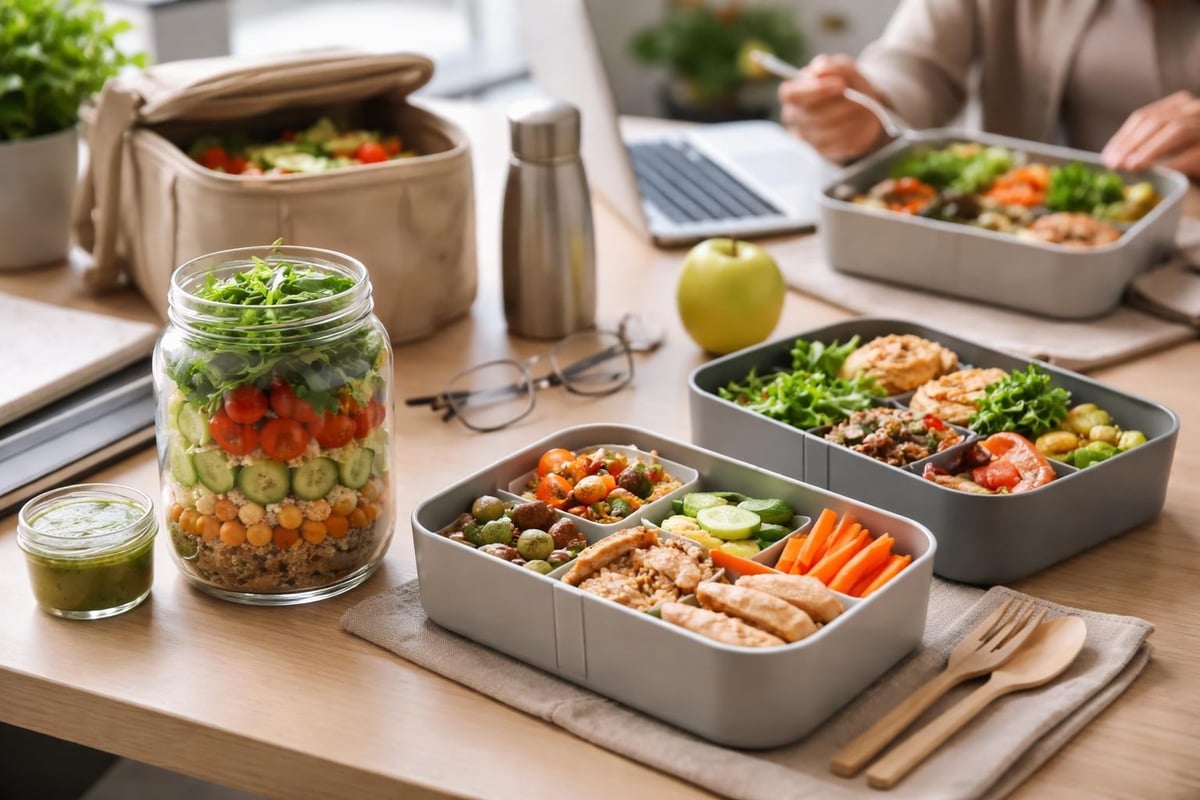
Nutritionists recommend bringing prepared lunches 4-5 days per week to maintain consistency. Invest in quality food containers that keep ingredients fresh and appetizing.
Office-friendly lunch options:
- Mason jar salads with dressing at the bottom
- Bento box combinations with variety
- Thermos soups and stews
- Cold grain bowls that don't require reheating
- Lettuce wraps assembled on-site
Common Mistakes That Undermine Lunch Success
Even with good intentions, certain patterns sabotage weight loss efforts. Understanding these neurological and behavioral pitfalls helps you avoid them.
Skipping Lunch and Its Consequences
Many people skip lunch thinking it reduces overall calories, but this strategy typically backfires. Extended fasting triggers stress hormones that increase cravings for high-calorie, high-sugar foods later in the day.
Why lunch skipping fails:
- Depletes willpower reserves for evening choices
- Triggers primal hunger that overrides rational decisions
- Slows metabolism through extended fasting periods
- Creates restriction-binge cycles
- Reduces focus and productivity
Your brain interprets meal skipping as scarcity, activating ancient survival mechanisms that prioritize calorie-dense foods when you finally eat.
The "Healthy" Salad Trap
Not all salads support weight loss goals. Many restaurant and pre-packaged salads contain 800-1200 calories through excessive dressings, cheeses, nuts, and fried toppings. Your brain categorizes these meals as "healthy" based on the salad label, creating cognitive dissonance between perception and reality.
Building truly supportive salads:
- Start with 3-4 cups leafy greens
- Add 4-6 oz lean protein
- Include 2-3 cups raw vegetables
- Use 2 tablespoons maximum dressing
- Limit cheese to 1-2 tablespoons
- Choose one healthy fat source
Awareness of actual caloric content prevents the false security that undermines your efforts.
Liquid Calories at Lunch
Beverages consumed with lunch often go uncounted mentally, yet significantly impact total caloric intake. Sweetened teas, juices, and specialty coffees can add 200-400 calories without triggering the same satiety response as solid foods.
Your brain doesn't register liquid calories the same way it processes solid food. The lack of chewing and faster gastric emptying means these calories bypass normal satiety mechanisms.
Better beverage choices:
- Water (plain or infused with fruit)
- Unsweetened tea (hot or iced)
- Black coffee or coffee with minimal milk
- Sparkling water with lemon or lime
- Herbal teas
Building Long-Term Lunch Habits
Sustainable weight loss requires habit formation, not constant vigilance. When healthy lunches for weight loss become automatic, you free mental energy for other life priorities while maintaining your progress.
The 10-Week Habit Formation Timeline
Neuroscience research indicates that complex eating habits require approximately 66 days to become automatic. However, simpler components solidify faster. Break your lunch transformation into progressive phases.
Weeks 1-3: Foundation Building
- Focus on consistent lunch timing
- Establish basic meal preparation routine
- Practice mindful eating techniques
- Track hunger and fullness signals
Weeks 4-7: Refinement
- Optimize macronutrient ratios
- Expand recipe variety
- Navigate challenging situations successfully
- Reduce reliance on tracking and measuring
Weeks 8-10: Automation
- Healthy choices feel natural and easy
- Cravings for previous habits diminish
- Social situations become manageable
- Weight loss progress becomes consistent
During this period, brain-based approaches to eating accelerate habit formation by working directly with subconscious patterns rather than relying solely on willpower.
Self-Monitoring Without Obsession
Awareness supports behavior change, but excessive monitoring can create unhealthy relationships with food. Find the balance that provides useful feedback without triggering anxiety or restriction mentality.
Helpful monitoring approaches:
- Weekly photos of typical lunches (visual patterns)
- Hunger/fullness ratings before and after meals
- Energy levels throughout the afternoon
- Weekly weight trends (not daily fluctuations)
- Monthly measurements and progress photos
Focus on how your body feels and functions rather than purely numerical data. This approach engages your brain's reward systems around positive outcomes rather than punishment-based motivation.
Seasonal Variations and Ingredient Flexibility
Your healthy lunches for weight loss should evolve with seasons, providing variety that prevents boredom while supporting local, fresh ingredients at peak nutritional value.
Spring and Summer Lunch Adaptations
Warmer months naturally favor lighter, fresher options. Take advantage of abundant produce and your body's reduced desire for heavy, warming foods.
Seasonal highlights:
- Strawberry spinach salad with grilled chicken
- Cold sesame noodle bowls with cucumber and edamame
- Gazpacho with shrimp and avocado
- Watermelon and feta salad with grilled fish
- Quick summer recipes featuring tomatoes, zucchini, and berries
Fall and Winter Nourishing Options
Cooler weather shifts preferences toward warming, comforting meals. Soups, stews, and roasted vegetables satisfy both physical and psychological needs during these months.
Cold-weather favorites:
- Butternut squash and lentil soup
- Roasted root vegetable bowls with tahini
- Turkey chili with vegetables
- Warm grain salads with roasted Brussels sprouts
- Chicken and vegetable stew
Seasonal eating aligns with your body's natural rhythms and provides psychological satisfaction that supports long-term adherence.
Personalizing Your Lunch Strategy
Individual differences in metabolism, preferences, lifestyle, and goals require customized approaches. What works for one person may not suit another, making self-awareness essential.
Accounting for Physical Activity Levels
Your lunch needs vary based on exercise timing and intensity. Active individuals require different macronutrient ratios and timing than sedentary workers.
Activity-based adjustments:
- Pre-workout lunch (2-3 hours before): Moderate protein, complex carbs, lower fat
- Post-workout lunch: Higher protein, moderate carbs, anti-inflammatory foods
- Sedentary days: Higher vegetables and protein, moderate carbs and fats
- High-activity days: Increased portions of all macronutrients
Listen to your body's signals rather than following rigid rules disconnected from your actual energy expenditure.
Dietary Preferences and Restrictions
Weight loss success doesn't require specific dietary philosophies. Whether you follow plant-based, Mediterranean, low-carb, or other approaches, the principles of balanced, whole-food lunches apply universally.
Universal success factors:
- Adequate protein for satiety and muscle preservation
- Abundant vegetables for nutrients and fiber
- Appropriate portions for your goals and activity
- Minimal processed foods and added sugars
- Enjoyment and satisfaction with your choices
Choose an approach that aligns with your values, preferences, and lifestyle rather than following trends that feel restrictive or unsustainable.
The Role of Stress Management in Lunch Choices
Chronic stress fundamentally alters eating behaviors through hormonal changes that increase cravings and reduce satiety awareness. Your lunch choices both influence and are influenced by your stress levels.
Cortisol and Midday Eating Decisions
Elevated cortisol drives preference for high-calorie, high-sugar foods through ancient survival mechanisms. When your brain perceives threat, it prioritizes immediate energy storage over long-term health goals.
Stress-eating intervention strategies:
- Practice 5-minute breathing exercises before lunch
- Create a calm eating environment away from work stress
- Use lunch as a mental break, not just fuel
- Address stress sources directly rather than soothing with food
- Establish regular stress-management practices
When you manage stress effectively, your lunch choices naturally align with your weight loss goals because the neurological pressure toward comfort eating diminishes.
Creating Lunch Rituals That Reduce Stress
Rituals provide psychological comfort and stress reduction through predictability and mindfulness. Transform lunch from a rushed necessity into a nourishing pause that supports both body and mind.
Beneficial lunch rituals:
- Setting the table, even at your desk
- Lighting a candle or playing calming music
- Expressing gratitude before eating
- Taking a brief walk before or after lunch
- Preparing visually appealing plates
These practices activate the parasympathetic nervous system, optimizing digestion and allowing your brain to register satisfaction from smaller portions.
Making Healthy Lunches Enjoyable
Sustainable weight loss requires that healthy choices provide genuine satisfaction. When lunches feel like punishment or deprivation, adherence becomes a constant battle rather than a natural progression.
Flavor Enhancement Without Excessive Calories
Bold flavors create satisfaction without relying on excessive fats, sugars, or salts. Herbs, spices, acids, and umami ingredients transform simple ingredients into memorable meals.
Flavor-boosting ingredients:
- Fresh herbs (cilantro, basil, parsley, mint)
- Spices (cumin, paprika, turmeric, cinnamon)
- Citrus juice and zest
- Vinegars (balsamic, rice, apple cider)
- Fermented foods (kimchi, sauerkraut, miso)
- Roasted garlic and caramelized onions
These additions stimulate your taste receptors more intensely, triggering greater satisfaction responses in your brain's reward centers.
Texture Variety and Visual Appeal
Your brain processes eating as a multi-sensory experience. Meals that engage multiple senses create greater satisfaction and memory formation around healthy choices.
Textural elements to include:
- Crunchy (raw vegetables, nuts, seeds)
- Creamy (avocado, Greek yogurt, hummus)
- Chewy (whole grains, lean meats)
- Crispy (roasted chickpeas, air-fried vegetables)
- Tender (steamed vegetables, braised proteins)
Visual presentation also matters. Colorful plates with distinct food sections appeal to your brain's aesthetic preferences and make healthy eating feel special rather than restrictive.
Troubleshooting Common Lunch Challenges
Even with solid strategies, specific obstacles arise. Addressing these challenges proactively prevents them from derailing your progress.
Budget-Friendly Healthy Lunch Solutions
Cost concerns often drive people toward cheaper, processed options. However, nutritious lunches on a budget become possible with strategic shopping and preparation.
Money-saving tactics:
- Buy seasonal produce at peak availability
- Choose frozen vegetables for convenience and value
- Purchase proteins in bulk and freeze portions
- Utilize canned beans and legumes
- Grow simple herbs at home
- Shop sales and plan meals around discounts
Batch cooking and meal preparation reduce both cost and food waste while supporting your healthy lunch goals.
Time Constraints and Quick Solutions
Busy schedules challenge lunch preparation, but time investment upfront creates efficiency throughout the week. Even 15-minute preparations can yield satisfying, weight-loss-friendly meals.
Speed-friendly approaches:
- Pre-washed salad greens and pre-cut vegetables
- Rotisserie chicken for quick protein
- Canned wild-caught fish (salmon, sardines)
- Quick assembly recipes under 15 minutes
- Simple combinations that don't require cooking
Simplicity doesn't mean sacrifice. Basic combinations of quality ingredients often satisfy more than elaborate preparations.
Dealing With Plateaus and Motivation Dips
Weight loss rarely progresses linearly. Plateaus and motivation challenges are normal parts of the journey, not signs of failure or need for drastic changes.
When progress stalls:
- Review portion sizes objectively
- Assess sleep quality and stress levels
- Increase non-exercise activity throughout the day
- Vary your lunch options to prevent adaptation
- Focus on non-scale victories (energy, mood, fitness)
Your brain adapts to repeated stimuli, including dietary patterns. Strategic variations prevent metabolic adaptation while maintaining the core principles that support your goals.
Integration With Overall Lifestyle
Healthy lunches for weight loss don't exist in isolation. They form one component of comprehensive lifestyle patterns that support sustainable transformation.
Breakfast and Dinner Coordination
Your three main meals should work together, providing balanced nutrition throughout the day without excessive calories at any single meal. Coordination prevents the compensation effect where a light lunch leads to evening overeating.
Daily meal balance:
- Breakfast: 300-400 calories with protein and fiber
- Lunch: 400-500 calories with balanced macronutrients
- Dinner: 400-500 calories emphasizing vegetables and protein
- Optional snacks: 100-200 calories if needed
This distribution maintains stable blood sugar and energy while supporting consistent weight loss without excessive hunger.
Sleep and Recovery Impact on Lunch Choices
Poor sleep dramatically affects food decisions through hormonal disruption. Sleep deprivation increases ghrelin (hunger hormone) and decreases leptin (satiety hormone), creating the perfect storm for overeating.
Sleep optimization for better lunch choices:
- Maintain consistent sleep schedule (7-9 hours nightly)
- Avoid caffeine after 2:00 PM
- Create dark, cool sleeping environment
- Limit screen exposure before bed
- Manage stress through evening routines
When you prioritize sleep quality, your brain functions optimally during lunch decisions, making healthy choices feel easier and more natural.
Creating sustainable healthy lunches for weight loss requires understanding how your brain processes food decisions and establishing systems that support rather than fight your neurology. When you combine practical nutrition knowledge with neuroscience-based habit formation, lasting transformation becomes not just possible but natural. If you're ready to reprogram your relationship with food at the deepest level, Oneleaf offers a neuroscience-based approach that makes healthy choices automatic through just 10 minutes of daily practice, helping you change your brain so your behaviors-including lunch choices-naturally align with your weight loss goals.