The promise of transforming fresh fruits and vegetables into vibrant, nutrient-packed liquids has captivated the health and wellness world for decades. Juicing has become synonymous with quick fixes, celebrity endorsements, and colorful Instagram posts, but the reality behind this popular practice is far more nuanced than marketing campaigns suggest. While extracting juice from produce can deliver concentrated vitamins and minerals, the relationship between juicing and sustainable weight management involves complex interactions between nutrition, psychology, and how your brain processes food choices. Understanding these connections helps you make informed decisions about whether juicing deserves a place in your approach to health and why addressing the root causes of eating behaviors creates more lasting transformation than any temporary dietary intervention.
Understanding the Mechanics of Juicing for Weight Loss
When you extract liquid from fruits and vegetables, you're creating a concentrated source of micronutrients while removing most of the fiber content. This process fundamentally changes how your body processes these foods compared to eating them whole.
The extraction process affects your body in several key ways:
- Rapid nutrient absorption without digestive breakdown of fiber
- Immediate blood sugar response, particularly with fruit-heavy combinations
- Reduced satiety signals that normally come from chewing and fiber
- Caloric concentration that can exceed whole food portions
- Oxidation of nutrients once exposed to air during juicing
From a purely caloric perspective, replacing higher-calorie meals with vegetable-based juices naturally creates a deficit. A typical juice might contain 100-200 calories compared to a 600-calorie meal. However, this mathematical simplicity ignores the neurological and behavioral complexities that determine long-term success.

The Fiber Factor and Metabolic Impact
The absence of fiber in juicing represents both its primary advantage for nutrient delivery and its most significant limitation for weight management. Research on juicing indicates that fiber plays crucial roles beyond simple digestion.
Fiber slows glucose absorption, feeds beneficial gut bacteria, promotes feelings of fullness, and helps regulate appetite hormones like ghrelin and leptin. When you remove fiber through juicing, you eliminate these regulatory mechanisms that help your brain receive accurate signals about satisfaction and energy needs.
Your brain's hypothalamus monitors nutrient availability and energy balance through complex feedback systems. Without fiber to moderate this process, the rapid influx of simple sugars can trigger insulin spikes followed by crashes that intensify cravings rather than reducing them. This creates a neurological pattern that works against sustainable weight management.
The Neuroscience Behind Juice Cleanses and Restriction
Many people turn to juicing for weight loss through multi-day cleanses or juice fasts, hoping to reset their relationship with food. While these approaches often produce immediate scale changes, the underlying brain science reveals why such dramatic restriction typically backfires.
When you drastically reduce caloric intake, your brain interprets this as a threat to survival. The amygdala, your brain's threat-detection center, becomes hypervigilant about food availability. Meanwhile, regions responsible for executive function and decision-making receive less glucose, making it harder to resist cravings.
Your brain responds to severe restriction with predictable patterns:
- Increased production of ghrelin, the hunger hormone that signals your brain to seek food
- Decreased leptin sensitivity, disrupting your brain's ability to recognize fullness
- Heightened reward responses to high-calorie foods in the nucleus accumbens
- Cortisol elevation that promotes fat storage, particularly around the midsection
- Reduced metabolic rate as your body conserves energy for perceived scarcity
Understanding these mechanisms explains why juice cleanses rarely create lasting change. The temporary weight loss comes primarily from water, glycogen depletion, and reduced food volume in your digestive system rather than actual fat loss. Once normal eating resumes, your brain's compensatory mechanisms drive increased consumption to restore perceived deficits.
The Psychology of Liquid Calories
Your brain processes liquid calories differently than solid foods, which has profound implications for weight management. Studies on satiety reveal that drinking calories, even nutrient-dense ones, produces weaker fullness signals than eating the same ingredients in whole form.
This phenomenon relates to sensory-specific satiety and the oral processing theory of appetite regulation. When you chew food, you activate mechanoreceptors in your jaw and mouth that send signals to your brainstem and hypothalamus. These signals contribute significantly to the cascade of events that eventually produce feelings of satisfaction.
Juicing bypasses much of this neurological pathway. You can consume the caloric equivalent of several apples in minutes without experiencing the cumulative satisfaction that comes from eating them slowly, one at a time. This mismatch between caloric intake and psychological satisfaction can actually increase total daily consumption despite good intentions.
Strategic Applications of Juicing in a Balanced Approach
Rather than viewing juicing for weight loss as an all-or-nothing intervention, consider how it might complement a brain-based approach to eating behaviors. The verdict on whether we should really be juicing our food depends largely on how you integrate it into your overall lifestyle.
Practical applications that support rather than sabotage weight management:
- Using vegetable-based juices as nutrient boosters alongside balanced meals
- Timing juice consumption after exercise when rapid nutrient delivery benefits recovery
- Focusing on low-glycemic vegetables like celery, cucumber, and leafy greens
- Adding small amounts of healthy fats to slow absorption and improve satiety
- Maintaining awareness of total daily caloric intake rather than viewing juice as "free" calories
- Preserving whole fruit and vegetable consumption as your primary produce intake

Vegetable-Forward Formulas That Support Brain Function
The composition of your juice matters enormously for both weight management and cognitive function. High-sugar fruit juices spike blood glucose and insulin, creating the boom-and-bust cycle that undermines stable energy and clear thinking.
Vegetable-forward combinations emphasize nutrients that support neurotransmitter production and brain health without excessive sugar. Dark leafy greens provide folate and magnesium critical for mood regulation. Beets contain nitrates that improve cerebral blood flow. Ginger offers anti-inflammatory compounds that protect neural tissue.
Important considerations for juicing include freshness, variety, and organic produce when possible to minimize pesticide exposure that can affect neurological function. Consuming juice immediately after preparation preserves nutrient integrity and prevents oxidation.
The Blending Alternative and Fiber Preservation
Many nutrition experts recommend blending instead of juicing when the goal involves weight management and sustained satiety. Blending retains all the fiber while still breaking down cell walls to improve nutrient availability.
This distinction matters profoundly for how your brain and body respond to the meal. With fiber intact, you maintain the blood sugar regulation, gut health benefits, and satiety signals that support healthy weight. You also consume more volume for the same calories, which activates stretch receptors in your stomach that communicate fullness to your brain.
Comparing juicing and blending for weight management:
- Nutrient density: Both methods concentrate vitamins and minerals, though juicing slightly edges ahead in immediate absorption
- Fiber content: Blending preserves all fiber; juicing removes most or all depending on the method
- Satiety factor: Blending produces significantly greater fullness for equivalent calories
- Blood sugar impact: Blending moderates glucose response; juicing can spike levels rapidly
- Preparation time: Similar for both methods, though juicing requires more cleanup
- Versatility: Blending allows protein, fat, and supplement additions for complete meals
If your primary goal centers on sustainable weight management, smoothies that include protein, healthy fats, and whole fruits and vegetables generally serve you better than extracted juices. They provide balanced macronutrients that keep your brain satisfied and your metabolism stable.
Addressing the Root Causes Beyond Dietary Methods
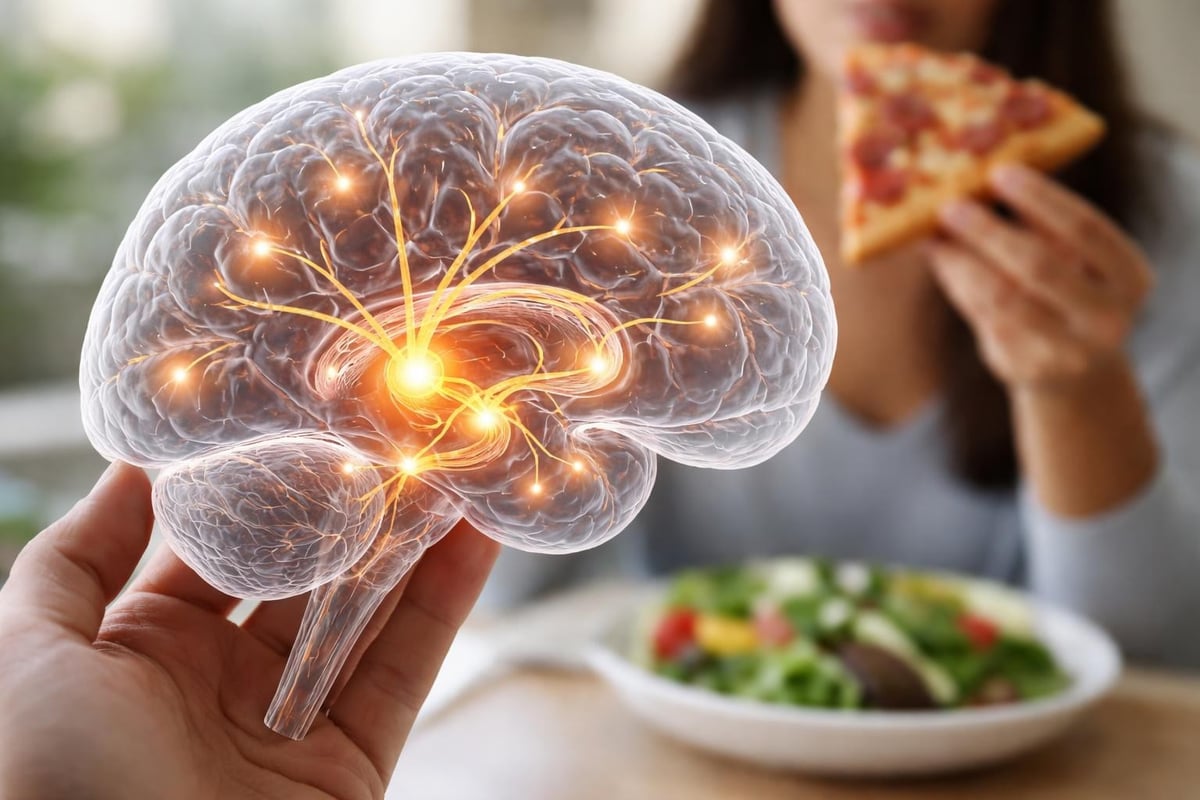
While juicing for weight loss receives tremendous attention in wellness circles, focusing exclusively on what you consume misses the fundamental driver of eating behaviors: your brain's learned patterns and subconscious programming.
Your current relationship with food reflects years of neural pathways built through repetition, emotional associations, stress responses, and reward conditioning. These deeply embedded patterns operate automatically, often overriding your conscious intentions to eat healthier or consume fewer calories.
The brain systems that determine eating behaviors include:
- The prefrontal cortex, which handles decision-making and impulse control but fatigues easily
- The limbic system, which processes emotions and creates powerful food associations
- The basal ganglia, where habits form and become automatic responses
- The reward circuitry, which releases dopamine in response to palatable foods
- The stress response system, which can drive emotional eating and cravings
Understanding food cravings at the neurological level reveals why temporary dietary interventions like juice cleanses rarely create lasting change. You're attempting to override powerful subconscious programming with willpower alone, which exhausts your prefrontal cortex and inevitably fails.
Rewiring Neural Patterns for Lasting Transformation
Sustainable weight management requires addressing these underlying brain patterns rather than simply manipulating food intake. Neuroplasticity research demonstrates that you can rewire established neural pathways through consistent, focused practice that reaches your subconscious mind.
This process involves techniques that bypass the critical, analytical conscious mind and speak directly to the pattern-generating systems in your brain. When you change these foundational patterns, healthy choices become automatic rather than requiring constant effort and willpower.
Methods proven to reshape eating behaviors include guided visualization, self-hypnosis, mindfulness practices, and neuroscience-based audio programs. These approaches work by creating new neural pathways while weakening old ones, gradually shifting your automatic responses to food, stress, and emotional triggers.
Unlike restrictive diets or temporary interventions, brain-based reprogramming creates changes that feel natural and effortless. You're not fighting against your own mind but rather aligning your subconscious patterns with your conscious goals.
Practical Guidelines for Incorporating Juice Safely
If you choose to include juicing in your approach to health, specific strategies help you avoid common pitfalls while maximizing potential benefits. Can juicing help with weight loss depends largely on implementation details and overall context.
Evidence-based recommendations for safe, effective juicing:
- Limit fruit to one small piece per juice to control sugar content
- Emphasize low-glycemic vegetables like cucumber, celery, and leafy greens
- Consume juice alongside or after whole food meals rather than as replacements
- Never extend juice-only periods beyond 24-48 hours without medical supervision
- Monitor total caloric intake to ensure adequate nutrition for metabolic function
- Include protein and healthy fats in your overall daily intake
- Pay attention to how your body and mind respond rather than following rigid rules
- Maintain whole fruit and vegetable consumption as your primary produce source
The most successful approaches treat juicing as a supplementary practice rather than a primary weight loss method. You might enjoy a green juice mid-morning as a nutrient boost while still eating balanced, satisfying meals that provide complete nutrition.
Recognizing Warning Signs and Contraindications
Certain individuals should approach juicing with extra caution or avoid it entirely. Those with diabetes or insulin resistance need to carefully monitor blood sugar responses, as even vegetable juices can cause problematic spikes without fiber to moderate absorption.
People with kidney disease should consult healthcare providers before juicing, as concentrated potassium and oxalates can pose risks. Anyone with a history of disordered eating may find that juice cleanses trigger restriction patterns or binge-restrict cycles that harm both physical and mental health.
If you experience dizziness, extreme fatigue, irritability, difficulty concentrating, or intense cravings during a juicing period, these signals indicate your brain isn't receiving adequate fuel. Respect these warning signs rather than pushing through with willpower.
The Long-Term Perspective on Sustainable Change
After examining the science, psychology, and practical considerations surrounding juicing for weight loss, a clear pattern emerges. Short-term interventions that restrict calories or eliminate food groups may produce immediate scale changes, but they rarely address the underlying factors that determine long-term success.
Your brain's powerful pattern-recognition and habit-formation systems will always reassert themselves unless you directly reprogram them. This explains why most diets fail and why people regain weight after juice cleanses, even when they experience temporary success.
True transformation requires working with your brain rather than against it. When you invest energy in reshaping the subconscious patterns that drive automatic behaviors, you create lasting change that doesn't require constant vigilance or willpower.
Key principles for sustainable weight management:
- Address root causes in brain programming rather than just manipulating food intake
- Build habits that feel natural and automatic rather than forced or restrictive
- Develop awareness of hunger and satiety signals instead of following external rules
- Process emotional triggers and stress responses that drive eating behaviors
- Create positive associations with healthy foods through neurological reprogramming
- Practice self-compassion rather than punishment when setbacks occur
- Focus on overall lifestyle patterns rather than seeking quick fixes
This comprehensive approach recognizes that your body follows your brain. When you change the neural patterns that determine your choices, your behaviors change naturally, and your weight follows without the struggle and restriction that characterize traditional dieting.
The pros and cons of juicing for weight loss ultimately depend on how it fits within this larger framework. Used strategically as a supplement to whole foods and brain-based behavioral change, it can provide concentrated nutrition and variety. Relied upon as a primary weight loss method, it typically creates more problems than it solves.
Juicing for weight loss offers concentrated nutrients and initial motivation, but sustainable transformation requires addressing the brain patterns that drive eating behaviors. Rather than cycling through temporary dietary interventions, Oneleaf helps you reprogram your subconscious mind to make healthy choices feel natural and automatic. In just 10 minutes a day, guided audio sessions combine neuroscience, behavioral psychology, and self-hypnosis to reduce cravings, boost motivation, and rewire the mental patterns that lead to overeating. When you change your brain, your choices change naturally, and lasting results follow without restriction or willpower battles.