Weight loss represents a unique challenge for men, shaped by distinct metabolic patterns, hormonal influences, and lifestyle demands. While the market overflows with generic diet plans, a successful lose weight diet plan male approach requires understanding the neuroscience behind eating behaviors and how your brain controls hunger, cravings, and food choices. This comprehensive guide explores evidence-based strategies that address not just what you eat, but why you eat, helping you build sustainable habits through brain-based transformation.
Understanding Male Metabolism and Weight Loss
Male bodies process food and store fat differently than female bodies due to hormonal profiles dominated by testosterone and different muscle-to-fat ratios. Men typically carry excess weight around their midsection, creating visceral fat deposits that increase health risks but respond more readily to lifestyle interventions.
Your basal metabolic rate determines how many calories your body burns at rest. Men generally have higher metabolic rates due to greater muscle mass, which means muscle-building activities become crucial components of any effective weight loss strategy. However, metabolism represents just one piece of the puzzle.
The brain's role in weight management often gets overlooked. Your hypothalamus regulates hunger signals, your prefrontal cortex makes food decisions, and your limbic system drives emotional eating patterns. These neural pathways become hardwired through repetition, creating automatic behaviors that either support or sabotage your goals.

Core Nutritional Principles for Male Weight Loss
Creating a caloric deficit remains fundamental to weight loss, but how you achieve that deficit determines whether you lose fat sustainably or trigger metabolic adaptation and muscle loss. A well-designed lose weight diet plan male strategy balances macronutrients to preserve muscle while targeting fat stores.
Protein Requirements and Muscle Preservation
Men need adequate protein to maintain muscle mass during weight loss. Research consistently shows that higher protein intake supports fat loss while protecting lean tissue.
Daily protein targets for active men:
- Sedentary lifestyle: 0.8-1.0 grams per pound of body weight
- Moderate activity: 1.0-1.2 grams per pound of body weight
- Heavy training: 1.2-1.6 grams per pound of body weight
Protein also increases satiety, reducing overall calorie intake naturally. When your brain receives signals that nutritional needs are met, hunger hormones decrease and the compulsion to overeat diminishes.
Strategic Carbohydrate Management
Carbohydrates aren't the enemy, but their timing and quality matter significantly. Men who train regularly need carbohydrates to fuel workouts and support recovery, while sedentary individuals benefit from moderate restriction.
Focus on nutrient-dense sources like vegetables, fruits, legumes, and whole grains. These foods provide fiber that slows digestion, stabilizes blood sugar, and keeps you satisfied longer. The best diets for men emphasize quality over restriction, teaching your brain to prefer whole foods through repeated positive experiences.
Your subconscious mind learns through association. When you consistently pair nutritious foods with positive feelings rather than deprivation and punishment, those neural pathways strengthen, making healthy choices increasingly automatic.
Healthy Fats for Hormonal Balance
Dietary fat supports testosterone production and overall hormonal health in men. Very low-fat diets can actually impair testosterone levels, as research on low-fat diets and testosterone demonstrates, potentially compromising both weight loss efforts and overall wellbeing.
Include sources like:
- Avocados and olive oil
- Nuts and seeds
- Fatty fish rich in omega-3s
- Whole eggs
Aim for 20-35% of total calories from fat, adjusted based on individual response and activity levels.
Building Your Personalized Eating Framework
Generic meal plans fail because they ignore individual preferences, schedules, and psychological patterns. A personalized meal plan for weight loss male approach considers your lifestyle while addressing the mental patterns driving your eating behaviors.
Daily Calorie Targets
Calculate your maintenance calories using the Mifflin-St Jeor equation, then create a moderate deficit:
- Calculate BMR: (10 × weight in kg) + (6.25 × height in cm) - (5 × age) + 5
- Multiply by activity factor (1.2-1.9 depending on exercise frequency)
- Subtract 500-750 calories for gradual fat loss
Aggressive deficits trigger survival mechanisms in your brain, increasing hunger hormones and making every food choice a battle of willpower. Moderate deficits allow your subconscious mind to adapt gradually, reducing resistance.
Meal Timing and Frequency
Contrary to popular belief, meal timing matters less than total daily intake for most men. Choose an eating schedule that fits your lifestyle and helps manage hunger naturally.
Common approaches:
- Three square meals daily
- Four to five smaller meals
- Intermittent fasting protocols (16:8 or 14:10)
The key is consistency. When you eat at predictable times, your brain anticipates meals and regulates hunger hormones accordingly. Random eating patterns keep your system in constant uncertainty, amplifying cravings.

Sample Daily Eating Structures
Rather than rigid meal plans, these frameworks provide flexibility while ensuring nutritional adequacy. A sustainable male eating plan for fat loss adapts to your preferences while supporting your goals.
Higher Carb Approach (Active Men)
Breakfast (500 calories)
- 3-4 whole eggs scrambled
- 1 cup oatmeal with berries
- Black coffee or green tea
Lunch (600 calories)
- 6-8 oz grilled chicken breast
- 2 cups mixed vegetables
- 1 cup brown rice
- Small serving of olive oil
Dinner (600 calories)
- 6-8 oz salmon or lean beef
- Large mixed salad with varied vegetables
- Medium sweet potato
- Light vinaigrette dressing
Snacks (200-300 calories)
- Greek yogurt with nuts
- Protein shake
- Apple with almond butter
Lower Carb Approach (Sedentary or Metabolically Resistant)
Breakfast (450 calories)
- 4-egg omelet with vegetables and cheese
- Avocado half
- Coffee with minimal cream
Lunch (550 calories)
- 7-8 oz turkey or chicken
- Large vegetable salad with olive oil
- Handful of nuts
Dinner (650 calories)
- 8 oz grass-fed beef or fatty fish
- Roasted non-starchy vegetables
- Small portion of quinoa or beans
Snacks (250 calories)
- Beef jerky
- Vegetables with hummus
- Dark chocolate square with nuts
The Neuroscience of Sustainable Weight Loss
Traditional diets fail because they rely on conscious willpower, which represents a limited resource. Your conscious mind makes only about 5% of daily decisions, while your subconscious mind controls the remaining 95% through automated patterns and habits.
Every time you force yourself to resist a craving or count calories through sheer determination, you're fighting against deeply ingrained neural pathways. This approach exhausts mental resources and eventually fails when willpower depletes.
Brain-based weight loss works differently. Instead of fighting your subconscious patterns, you reprogram them through targeted neuroplasticity techniques that make healthy behaviors automatic and effortless.
How Neural Pathways Shape Eating Behaviors
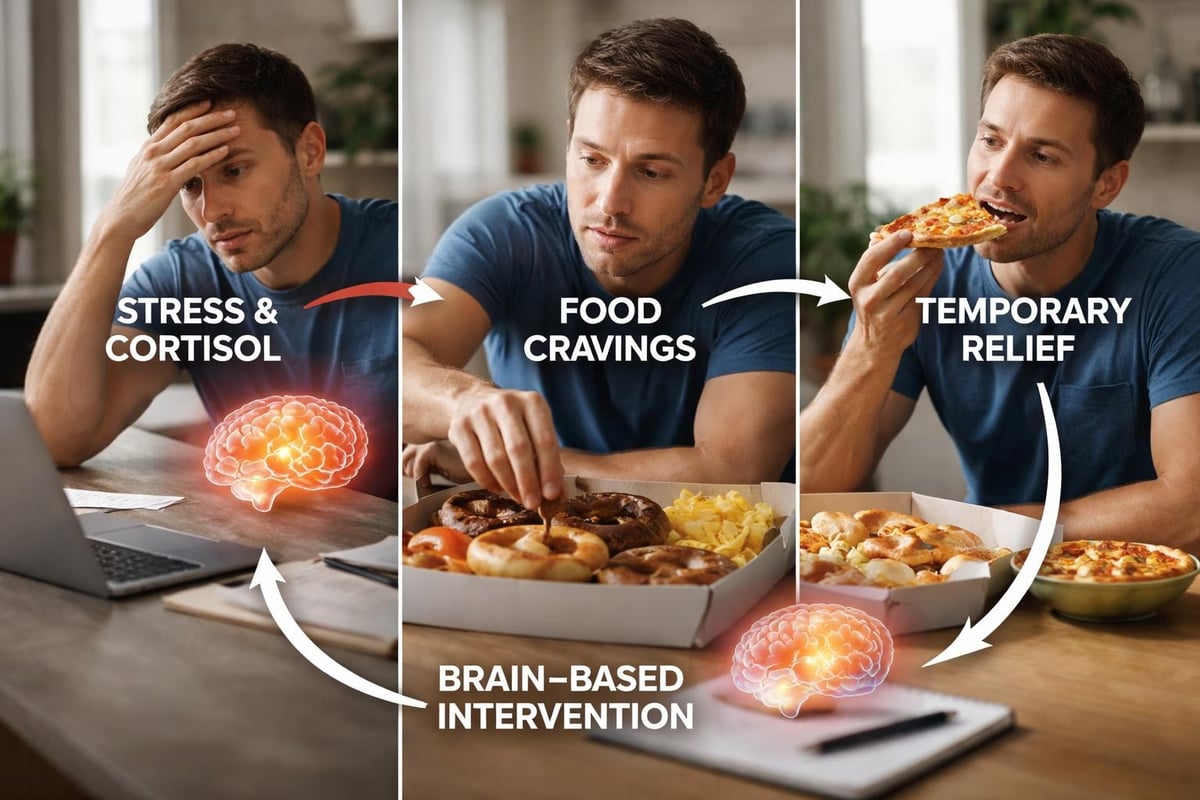
Your brain forms associations between foods, emotions, and contexts through repeated experiences. If stress consistently triggers ice cream consumption, a neural pathway connects stress → ice cream → temporary relief. This pathway strengthens with each repetition until it becomes automatic.
The same mechanism works positively. When you consistently experience satisfaction and wellbeing from nutritious meals, those neural pathways strengthen, gradually overriding old patterns. The process requires repetition and emotional engagement, which is why simple information about healthy eating rarely creates lasting change.
Stress, Cortisol, and Weight Gain
Chronic stress elevates cortisol levels, which increases abdominal fat storage and drives cravings for high-calorie comfort foods. Men often cope with work pressure, financial concerns, and relationship challenges through eating, creating stress-food associations in the brain.
Breaking this cycle requires addressing stress management at the neural level, teaching your subconscious mind new coping mechanisms that don't involve food. Techniques combining guided visualization, progressive relaxation, and positive suggestion can reprogram these automatic responses.
Practical Implementation Strategies
Knowledge alone doesn't create change. Successful implementation of any lose weight diet plan male strategy requires translating information into consistent action, which happens most effectively when your subconscious mind supports rather than resists your goals.
Environmental Design for Automatic Success
Your environment shapes decisions more powerfully than willpower. When healthy foods occupy prime refrigerator space and processed snacks require effort to access, you naturally make better choices without conscious deliberation.
Key environmental modifications:
- Remove tempting foods from your home entirely during the initial phase
- Pre-portion snacks into individual servings
- Keep cut vegetables and prepared proteins readily available
- Use smaller plates and bowls to normalize appropriate portions
- Designate specific eating locations (avoid eating while working or watching TV)
These changes reduce decision fatigue and create new automatic patterns aligned with your goals.
Mindful Eating Practices
Mindful eating strengthens the connection between your conscious intentions and subconscious behaviors. When you eat with full attention rather than distraction, you register satisfaction signals more accurately and naturally consume appropriate amounts.
Practice these techniques:
- Eliminate screens during meals
- Chew thoroughly and eat slowly
- Notice flavors, textures, and sensations
- Pause midway through meals to assess hunger levels
- Stop eating when comfortably satisfied, not overly full
Regular practice rewires neural pathways, making mindful consumption your default mode rather than mindless overeating.
Monitoring Progress Beyond the Scale
Weight fluctuates daily due to water retention, food volume, and hormonal shifts. Obsessive scale monitoring creates anxiety and often leads to counterproductive decisions based on normal variations.
More reliable progress indicators:
- Weekly average weight (weighing daily, averaging weekly)
- Waist circumference measurements
- Progress photos from consistent angles
- How clothing fits
- Energy levels and workout performance
- Sleep quality improvements
- Reduced cravings and increased food control
Many men find that when they stop fixating on the scale and focus on behavior changes, weight loss occurs more consistently. Your brain responds better to positive reinforcement around new habits than criticism about numbers.
Common Pitfalls and Mental Traps
Understanding where others stumble helps you navigate challenges proactively. These obstacles stem from both practical miscalculations and psychological patterns that sabotage progress.
All-or-Nothing Thinking
Many men approach weight loss with perfectionist mindsets, believing they must follow their plan flawlessly or they've failed. This cognitive distortion creates a cycle of strict adherence followed by complete abandonment after minor deviations.
Your subconscious mind doesn't understand perfection. It responds to consistency and repetition, not flawless execution. A single meal or even a full day of overeating has minimal physical impact, but the mental spiral it triggers can derail weeks of progress.
Reframe imperfect days as learning opportunities rather than failures. Each instance of getting back on track after a deviation strengthens resilience and proves you can handle challenges without quitting entirely.
Social Pressure and Food-Centric Events
Men often face pressure to eat large portions, consume alcohol, or participate in food-centric social activities. Navigating these situations requires both practical strategies and mental preparation.
Before events, mentally rehearse your intended behaviors. Visualization activates similar neural pathways as actual experiences, preparing your subconscious mind to execute planned responses automatically when situations arise.
Comparing Your Progress to Others
Social media creates unrealistic expectations by showcasing extreme transformations and rapid results. Research on dietary advice in men's health media reveals how these portrayals often emphasize muscularity and dramatic changes that aren't representative of typical experiences.
Your journey is individual. Comparing yourself to others triggers discouragement and undermines the positive neural associations necessary for sustainable change. Focus on your own progress markers and celebrate incremental improvements.
Integrating Movement and Recovery
While nutrition drives weight loss primarily, physical activity amplifies results and provides crucial metabolic and psychological benefits. Movement also creates positive neural associations, releasing endorphins that your brain learns to crave.
Resistance Training Priority
Lifting weights or performing bodyweight resistance exercises preserves muscle mass during calorie deficits and increases metabolic rate. Men who incorporate resistance training at least three times weekly maintain better body composition during weight loss.
Muscle tissue burns more calories at rest than fat tissue, making muscle preservation strategically important for long-term weight maintenance. Additionally, visible strength improvements provide motivation independent of scale fluctuations.
Cardiovascular Exercise for Health
While not essential for weight loss, cardiovascular exercise improves heart health, increases calorie expenditure, and enhances insulin sensitivity. Find activities you genuinely enjoy rather than forcing yourself through dreaded workouts.
When exercise feels punishing, your brain develops negative associations that increase resistance over time. When movement feels rewarding, neural pathways strengthen that draw you naturally toward activity.
Recovery and Sleep Optimization
Sleep deprivation disrupts hunger hormones, increasing ghrelin (which stimulates appetite) and decreasing leptin (which signals fullness). Men sleeping less than seven hours nightly face significantly harder weight loss battles due to these hormonal disruptions.
Prioritize:
- Consistent sleep and wake times
- Dark, cool sleeping environment
- Limiting screen exposure before bed
- Managing stress through relaxation techniques
- Adequate recovery between intense workouts
Quality sleep allows your brain to consolidate new neural pathways formed during waking hours, making habit changes stick more effectively.
Long-Term Maintenance and Lifestyle Integration
Reaching your goal weight represents just one milestone in a longer journey of maintaining results. Most men regain lost weight because they view their lose weight diet plan male approach as temporary rather than a sustainable lifestyle shift.
Your brain cannot maintain behaviors it experiences as punishment or deprivation long-term. Sustainable results require making healthy choices feel natural, enjoyable, and aligned with your identity rather than forced compliance with external rules.
Flexible Consistency Over Rigid Perfection
Build flexibility into your approach from the beginning. Include foods you enjoy in appropriate portions rather than eliminating entire categories. This prevents the deprivation-binge cycle that derails so many weight loss efforts.
The 80/20 principle works well for most men: make nutritious choices 80% of the time, allowing 20% flexibility for social occasions and personal preferences. This balance satisfies both physiological needs and psychological sustainability.
Identity-Based Change
Rather than adopting behaviors temporarily to achieve a goal, shift your self-concept to align with your desired outcomes. When you identify as "someone who takes care of their health" rather than "someone on a diet," decisions flow naturally from that identity.
Your subconscious mind works to maintain consistency with your self-concept. By gradually shifting how you see yourself through repeated affirmations and visualizations, you create internal alignment that makes healthy choices automatic.
Successful male weight loss extends far beyond choosing the right foods or counting calories-it requires addressing the neural patterns that control eating behaviors at their source. By understanding how your brain creates automatic responses to food, stress, and emotions, you can implement strategies that work with your neuroscience rather than against it. If you're ready to stop fighting willpower battles and start rewiring your relationship with food from the inside out, Oneleaf offers a scientifically-designed approach that helps you reprogram your subconscious mind in just ten minutes daily, making healthy choices feel effortless and automatic while building results that truly last.