The weight loss industry has witnessed an unprecedented surge in popularity surrounding injectable medications designed to facilitate rapid weight reduction. These pharmaceutical interventions have dominated headlines, social media feeds, and medical consultations throughout 2026, promising transformative results with minimal effort. However, beneath the allure of quick fixes lies a complex landscape of medical risks, counterfeit products, and sustainability concerns that demand careful examination. Understanding the full scope of slimming injections requires looking beyond marketing claims to evaluate both immediate dangers and long-term effectiveness, while considering whether addressing the root cause of weight gain might offer more durable solutions.
Understanding the Medical Landscape of Weight Loss Injections
Slimming injections represent a category of prescription medications originally developed for managing type 2 diabetes. These drugs work by mimicking hormones that regulate blood sugar levels and appetite control, creating sensations of fullness that reduce food intake. The mechanism involves slowing gastric emptying and signaling to the brain that the body has consumed adequate nutrition, even when caloric intake decreases significantly.
The medical community has approved specific formulations for weight management in patients meeting particular criteria. Healthcare providers typically prescribe these interventions for individuals with a body mass index above 30, or above 27 with weight-related health conditions. The treatment protocol requires ongoing medical supervision, regular monitoring of side effects, and integration within comprehensive lifestyle modification programs.

The Rise of Counterfeit Products
The explosive demand for slimming injections has created a dangerous parallel market of counterfeit and illegally distributed products. The World Health Organization has issued warnings about fake slimming injections discovered in multiple countries, highlighting severe health risks posed by these fraudulent medications. These counterfeit versions may contain incorrect dosages, contaminated ingredients, or entirely different substances that can cause serious medical complications.
Identifying legitimate products versus illegal alternatives requires vigilance. Guidance on spotting illegal slimming pens emphasizes checking for proper licensing, verifying pharmacy credentials, and examining packaging for security features. Common red flags include significantly reduced prices, online sellers without proper medical credentials, and products shipped from unregulated international sources.
The proliferation of counterfeit medications represents more than financial fraud. Patients have experienced severe adverse reactions including contamination-related infections, allergic responses to unknown ingredients, and dangerous dosing errors that have resulted in hospitalization. The European Directorate for the Quality of Medicines has documented multiple cases of falsified products entering legitimate supply chains, making even seemingly trustworthy sources potentially risky.
Medical Risks and Side Effects Requiring Consideration
Even authentic, properly prescribed slimming injections carry substantial side effect profiles that patients must carefully weigh. Common adverse reactions include persistent nausea, vomiting, diarrhea, constipation, and abdominal discomfort. These gastrointestinal symptoms often prove severe enough that patients discontinue treatment before achieving their weight loss goals.
More serious complications have emerged as usage has expanded:
- Pancreatitis: Inflammation of the pancreas requiring emergency medical intervention
- Gallbladder problems: Increased risk of gallstones and cholecystitis
- Kidney complications: Dehydration from gastrointestinal symptoms can impair kidney function
- Thyroid concerns: Potential links to thyroid tumors in animal studies
- Psychological effects: Depression, anxiety, and suicidal ideation in some patients
Recent updates on slimming injection risks emphasize that medical supervision remains absolutely critical throughout treatment. Regular monitoring allows healthcare providers to detect early warning signs of serious complications and adjust treatment protocols accordingly.
The Financial and Practical Burden
The cost structure of slimming injections creates significant barriers for many individuals seeking weight loss solutions. Monthly expenses typically range from several hundred to over one thousand dollars, and insurance coverage remains limited for purely cosmetic weight reduction. This financial commitment continues indefinitely, as discontinuing treatment almost universally results in weight regain.
Supply chain disruptions have plagued the market throughout 2025 and into 2026, with manufacturing limitations creating shortages that leave patients unable to access their prescribed medications. These interruptions force difficult decisions about rationing doses or seeking alternative sources, both of which carry health risks. The scarcity has also fueled the counterfeit market, as desperate individuals turn to unverified suppliers promising reliable access.
Beyond monetary costs, the treatment requires substantial lifestyle adjustments. Patients must adhere to strict injection schedules, manage refrigeration requirements for medication storage, and navigate the physical discomfort of regular injections. Travel becomes complicated when transporting temperature-sensitive medications, and the visible injection sites can create social discomfort or privacy concerns.
The Weight Regain Reality After Discontinuation
Perhaps the most significant limitation of slimming injections lies in what happens when treatment stops. Clinical studies consistently demonstrate that the majority of patients regain substantial weight within months of discontinuing injections. This pattern occurs because the medication addresses symptoms rather than underlying behavioral patterns and neurological drivers of overeating.
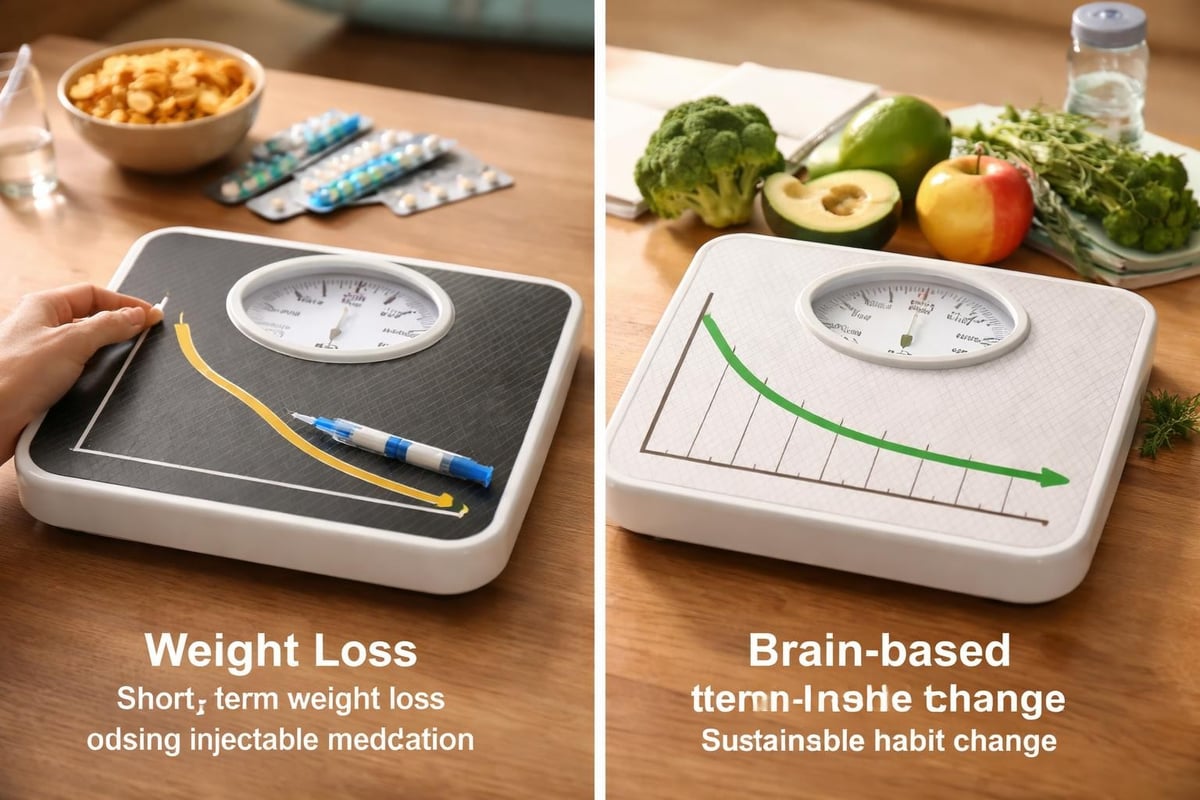
The neurological reality is straightforward. Weight loss through injections suppresses appetite through external pharmaceutical intervention, but does nothing to rewire the subconscious patterns that created weight gain initially. Stress eating, emotional connections to food, reward-seeking behaviors, and deeply ingrained habits remain entirely unchanged. When the artificial appetite suppression disappears, these fundamental drivers resurface with full force.
Research indicates that sustainable weight management requires addressing the brain's reward systems, stress responses, and automatic behavioral patterns. Pharmaceutical interventions create dependency rather than independence, leaving patients perpetually reliant on external solutions rather than developing internal resources for long-term success.
Psychological and Emotional Considerations
The psychological impact of relying on slimming injections extends beyond simple dependency. Many patients report feeling disconnected from their own hunger and satiety signals, uncertain whether their choices reflect genuine physiological needs or medication-induced suppression. This disconnection can damage the intuitive relationship with food that supports lasting healthy eating patterns.
For individuals with histories of disordered eating, the extreme appetite suppression can trigger or exacerbate problematic behaviors. The rapid weight loss may temporarily satisfy external validation desires, but without addressing underlying emotional drivers, the psychological foundation for eating disorders remains intact. Mental health professionals increasingly express concern about the normalization of medically-induced severe caloric restriction without corresponding psychological support.
The social comparison aspect cannot be ignored. As slimming injections gain prominence in media and celebrity culture, individuals may feel pressure to pursue these interventions despite personal reservations or medical unsuitability. This external motivation rarely translates into sustainable behavior change, and the inevitable weight regain after discontinuation can damage self-esteem and create cycles of shame and failure.
Evaluating the Complete Risk-Benefit Profile
Comprehensive analysis of slimming injection pros and cons reveals a nuanced picture that extends beyond simple effectiveness metrics. While clinical trials demonstrate significant short-term weight reduction for many participants, the complete assessment must include quality of life impacts, side effect burden, financial sustainability, and long-term outcome probabilities.
Potential advantages in specific medical contexts:
- Rapid weight reduction for patients with obesity-related health emergencies
- Metabolic improvements including blood sugar regulation and blood pressure reduction
- Psychological boost from initial success that may motivate broader lifestyle changes
- Medical supervision opportunities that catch other health concerns early
- Research contributions advancing understanding of appetite regulation mechanisms
Significant drawbacks requiring honest acknowledgment:
- High probability of complete weight regain upon treatment cessation
- Substantial side effect profiles affecting daily quality of life
- Ongoing financial burden without insurance coverage guarantees
- Dependency creation rather than skill development for independent weight management
- Counterfeit product risks in an increasingly compromised supply chain
The decision to pursue slimming injections should involve thorough medical consultation, realistic expectation setting, and comprehensive planning for what happens after treatment ends. Without strategies to address the neurological and behavioral foundations of weight gain, pharmaceutical interventions serve as temporary bandages rather than permanent solutions.
Neuroscience-Based Alternatives Addressing Root Causes
The growing recognition of weight regain patterns after pharmaceutical interventions has intensified interest in approaches that target the brain's role in eating behaviors. Neuroscience research demonstrates that weight management fundamentally depends on subconscious patterns, stress responses, and reward system activation rather than conscious willpower or appetite suppression alone.
Understanding how the brain creates eating habits reveals why external interventions produce temporary results. The neural pathways connecting stress to food seeking, boredom to snacking, and emotional discomfort to eating develop over years or decades. These deeply embedded patterns require targeted neurological reprogramming rather than pharmaceutical override to achieve lasting modification.
Modern neuroscience-based interventions work by:
- Identifying triggers that activate automatic eating responses
- Rewiring reward system associations between emotions and food
- Building new neural pathways that make healthy choices feel natural and effortless
- Addressing stress management at the neurological level to eliminate stress eating
- Creating sustainable motivation through subconscious belief restructuring
These approaches require consistent practice over time, but they build permanent infrastructure for weight management rather than creating dependency on external interventions. The brain's neuroplasticity allows for genuine transformation when properly directed through evidence-based techniques combining behavioral psychology, neuroscience principles, and targeted mental conditioning.
The Role of Subconscious Reprogramming
Traditional weight loss approaches focus almost exclusively on conscious decision-making: choosing healthier foods, restricting portions, increasing exercise. However, research indicates that approximately 95% of our daily behaviors operate at the subconscious level, driven by automatic patterns rather than deliberate choices. This explains why willpower-based approaches produce such disappointing long-term results.

Subconscious reprogramming techniques work by accessing the brain during states of heightened suggestibility and focused attention. During these windows, new beliefs, associations, and behavioral patterns can be introduced directly to the subconscious mind, bypassing the critical conscious filters that normally resist change. Over repeated sessions, these new patterns become the default automatic responses.
The process addresses specific neurological targets:
- Amygdala regulation: Reducing stress-triggered eating by calming the brain's fear and anxiety center
- Prefrontal cortex strengthening: Enhancing executive function for better impulse control
- Reward system recalibration: Shifting dopamine responses from food to other satisfying activities
- Habit loop interruption: Breaking automatic stimulus-response patterns that drive mindless eating
- Self-concept transformation: Updating subconscious identity to align with healthy behaviors
Unlike pharmaceutical interventions that require ongoing use, neurological reprogramming creates permanent changes in brain structure and function. The neural pathways strengthened through consistent practice become the new default, making healthy choices feel natural rather than requiring constant effort or external support.
Building Sustainable Habits Through Daily Practice
The effectiveness of neuroscience-based weight loss depends on consistency rather than intensity. Brief daily sessions that target subconscious patterns prove far more effective than sporadic intense efforts relying on willpower alone. Establishing a morning routine for lasting weight loss demonstrates how small, consistent practices compound into transformative results over time.
Ten minutes of daily mental conditioning creates cumulative neurological changes that manifest as effortless behavioral shifts. Patients report that cravings diminish naturally, emotional eating triggers lose their power, and healthy food choices become genuinely appealing rather than requiring sacrifice. This transformation reflects actual brain changes rather than temporary motivation or pharmaceutical suppression.
The practice integrates seamlessly into daily routines:
- Morning sessions establish positive intention and mental clarity for the day ahead
- Midday check-ins reinforce healthy patterns during vulnerable decision points
- Evening practices process stress without resorting to food-based coping mechanisms
- Situational sessions address specific challenges like social eating or travel
Technology enables accessibility that traditional therapy cannot match. Audio-based neuroscience interventions allow individuals to access expert-designed programming anywhere, at any time, without appointment scheduling or geographic limitations. This convenience factor dramatically improves adherence compared to programs requiring in-person attendance or rigid scheduling.
Addressing Emotional Eating at Its Source
Emotional eating represents one of the most persistent challenges in weight management, and pharmaceutical interventions offer no solution to this fundamental driver. When stress, anxiety, sadness, or boredom trigger eating responses, appetite suppressants simply create internal conflict rather than resolving the underlying pattern.
Neuroscience-based approaches recognize that emotional eating serves a function, attempting to regulate uncomfortable feelings through the temporary comfort food provides. Rather than fighting this pattern through restriction or willpower, effective interventions address the emotional regulation deficit that makes food seem necessary for coping.
Targeted techniques include stress response retraining, emotional awareness development, and alternative coping mechanism installation. By building genuine emotional regulation skills at the neurological level, the brain no longer needs food to manage difficult feelings. This represents true resolution rather than suppression or avoidance.
Supporting mental health through professional guidance enhances outcomes for individuals with complex emotional relationships with food. Resources like online psychotherapy services provide accessible support for addressing underlying psychological factors that contribute to weight challenges, creating a comprehensive approach that combines neurological reprogramming with therapeutic insight.
Special Considerations for Different Life Stages
Weight management strategies must adapt to different developmental stages and life circumstances. Adolescents facing weight concerns require particular sensitivity, as resources for teenage confidence and emotional development emphasize building healthy self-concept rather than pursuing quick fixes that may damage long-term relationships with food and body image.
For teenagers, slimming injections present especially problematic risks. Developing bodies and brains require adequate nutrition, and severe appetite suppression during crucial growth periods can create lasting health consequences. Additionally, introducing pharmaceutical dependency during formative years establishes unhealthy patterns of seeking external solutions rather than developing internal resources and resilience.
Adults facing weight challenges after pregnancy, during menopause, or in response to health conditions benefit from approaches that acknowledge physiological changes while building sustainable habits. Neuroscience-based interventions adapt to hormonal shifts and life stage stressors without requiring pharmaceutical intervention or restrictive dieting that often backfires during vulnerable periods.
Professional Medical Integration
While neuroscience-based weight management offers powerful standalone benefits, integration with appropriate medical care creates optimal outcomes for individuals with obesity-related health conditions. Healthcare providers can monitor metabolic markers, adjust medications for existing conditions, and provide medical expertise that complements neurological reprogramming.
The key distinction involves using medical supervision to support health rather than relying exclusively on pharmaceutical interventions for weight reduction. Comprehensive weight loss approaches combine the best of medical monitoring with evidence-based behavioral neuroscience, creating synergy that addresses both immediate health concerns and long-term sustainability.
This integrated model recognizes that weight represents a symptom of underlying patterns rather than a problem to be attacked through restriction or suppression. By addressing neurological drivers while monitoring physical health, patients achieve results that improve both quality of life and medical markers without the risks associated with pharmaceutical dependency.
Making Informed Decisions About Weight Loss Approaches
The decision about how to approach weight management deserves careful consideration of both immediate effectiveness and long-term sustainability. While slimming injections may offer rapid initial results, the complete picture includes side effect burden, financial commitment, counterfeit risks, and the near-certainty of weight regain after discontinuation.
Navigating the current weight loss landscape requires separating marketing hype from medical reality, understanding that no external intervention can permanently solve problems rooted in neurological patterns and subconscious behaviors. The most effective long-term strategies invest in changing the brain itself rather than temporarily overriding its signals.
Questions to guide decision-making include:
- Does this approach address why I gained weight, or just suppress symptoms temporarily?
- Can I sustain this intervention indefinitely, or will stopping cause relapse?
- Am I building skills and resources, or creating dependency on external solutions?
- What happens to my relationship with food and my body through this process?
- Will this approach still serve me five or ten years from now?
Honest answers to these questions often reveal that quick fixes sacrifice long-term success for short-term results. Sustainable weight loss through brain-based approaches requires patience and consistent practice, but delivers lasting transformation rather than temporary symptom suppression.
The Science Behind Lasting Transformation
Neuroscience research consistently demonstrates that permanent behavioral change requires neurological restructuring rather than external control. The brain's remarkable plasticity allows for genuine transformation when properly directed, creating new default patterns that operate automatically without requiring ongoing conscious effort or pharmaceutical support.
Studies using functional MRI imaging show measurable changes in brain activity patterns following consistent mental conditioning practices. The prefrontal cortex shows enhanced activation during decision-making scenarios involving food, indicating improved executive control. Simultaneously, the amygdala demonstrates reduced reactivity to stress triggers, explaining decreased stress-eating behaviors.
These neurological changes translate directly into behavioral shifts. Participants report that healthy choices genuinely feel more appealing, cravings lose their intensity, and emotional eating triggers no longer activate automatic responses. This represents authentic transformation rather than forced compliance through willpower or appetite suppression.
The timeline for neurological change varies by individual, but consistent daily practice typically produces noticeable shifts within weeks and substantial transformation within months. Unlike pharmaceutical interventions that work immediately but stop working upon discontinuation, brain-based approaches build gradually but create permanent infrastructure for sustained success.
Combining Multiple Evidence-Based Strategies
While neuroscience-based reprogramming provides the foundation for lasting change, comprehensive success often involves multiple complementary strategies. Mindful eating practices enhance awareness of genuine hunger and satiety signals. Stress management techniques address triggers without requiring food-based coping. Physical movement supports both metabolic health and mood regulation.
The key involves approaching these elements as skill-building rather than rule-following. Developing a personalized weight loss framework allows individuals to create sustainable lifestyles that feel natural rather than restrictive, incorporating activities and foods that provide genuine satisfaction while supporting health goals.
This holistic perspective recognizes that weight represents one aspect of overall wellbeing rather than an isolated problem requiring aggressive intervention. By addressing sleep quality, stress levels, emotional health, and neurological patterns comprehensively, individuals achieve transformation that extends far beyond numbers on a scale.
Understanding the Full Scope of Health Implications
Weight management discussions often focus narrowly on aesthetics or simple health metrics, missing the broader implications for quality of life, longevity, and psychological wellbeing. Approaches that damage relationships with food, create psychological distress, or require ongoing dependency may achieve short-term weight reduction while undermining overall health.
Slimming injections exemplify this paradox. While they may improve certain metabolic markers during active treatment, the side effect burden, psychological impact of appetite suppression, and inevitable weight regain create net negative outcomes for many users. The most effective interventions enhance overall wellbeing while naturally supporting healthy weight as a byproduct.
Brain-based approaches offer unique advantages in this regard. By reducing stress, improving emotional regulation, and creating genuine behavior change, these methods enhance quality of life independent of weight outcomes. Patients consistently report improvements in mood, energy, sleep quality, and life satisfaction alongside weight reduction, reflecting comprehensive health enhancement rather than narrow symptom targeting.
The long-term health implications differ dramatically as well. Pharmaceutical interventions carry ongoing risks as long as treatment continues, with emerging concerns about rare but serious complications still being evaluated. Neuroscience-based approaches carry essentially no medical risks while building psychological resources that serve individuals across all life domains, not just weight management.
Slimming injections offer rapid results but come with significant risks, costs, and the virtual certainty of weight regain once treatment stops. True transformation requires addressing the neurological patterns that drive eating behaviors, creating lasting change rather than temporary suppression. If you're ready to reprogram your brain for effortless healthy choices that last a lifetime, discover how Oneleaf combines neuroscience, behavioral psychology, and guided audio sessions to help you lose weight naturally in just 10 minutes a day.