Walking to lose weight represents one of the most accessible and sustainable approaches to transforming your body and health. Unlike restrictive diets or intense workout programs that rely on willpower alone, walking creates lasting change by working with your brain's natural mechanisms for habit formation and metabolic regulation. When you understand the neuroscience behind how walking affects both your body and mind, you can design a program that produces results without the stress and burnout that typically derail traditional weight loss efforts.
The Neuroscience of Walking and Weight Loss
Walking activates a cascade of neurological processes that extend far beyond simple calorie burning. Each step you take triggers the release of neurotransmitters that regulate mood, motivation, and decision-making processes related to food choices. Your brain's reward pathways respond to physical movement by releasing dopamine and endorphins, creating positive associations that make future walking sessions feel more appealing and reinforcing the behavior naturally.
The hippocampus, your brain's memory center, grows stronger with regular aerobic activity like walking. This enhanced cognitive function improves your ability to remember your health goals, resist impulsive food decisions, and maintain the mental clarity needed for sustainable lifestyle changes. Research demonstrates that consistent walking actually restructures neural pathways, making healthy choices feel more automatic over time rather than requiring constant conscious effort.

How Your Brain Regulates Appetite During Walking
Walking directly influences the hormones that control hunger and satiety. Regular walking programs help normalize leptin sensitivity, allowing your brain to accurately receive signals about energy storage and hunger needs. When leptin signaling functions properly, you naturally feel satisfied with appropriate food portions rather than experiencing constant cravings driven by hormonal imbalances.
The prefrontal cortex, responsible for executive function and impulse control, becomes more active following walking sessions. This increased activation helps you make more deliberate food choices rather than acting on emotional triggers or stress-related eating patterns. The neurological benefits persist for hours after your walk ends, creating windows of opportunity for better decision-making throughout your day.
Effective Strategies for Walking to Lose Weight
The key to successful weight loss through walking lies in creating a sustainable routine that aligns with your brain's capacity for habit formation. Starting with manageable goals prevents the mental resistance that occurs when changes feel overwhelming or unrealistic. Your subconscious mind accepts gradual shifts more readily than dramatic overhauls, making consistency more important than intensity during the initial phases.
Start with these foundational strategies:
- Begin with 15-20 minute walks daily to establish the habit before increasing duration
- Choose a consistent time each day to leverage your brain's natural circadian rhythms
- Focus on building the routine first, then gradually increase pace and distance
- Track your progress to provide feedback that reinforces motivation through visible results
- Pair walking with an existing daily habit to strengthen neural pathway connections
According to The Cleveland Clinic's analysis of walking for weight loss, consistency matters more than perfection when building a sustainable program. Your brain responds best to predictable patterns that become automated through repetition.
Optimizing Duration and Intensity
The amount of time needed for walking to produce measurable weight loss depends on multiple factors including your current metabolism, stress levels, and how well your brain regulates appetite signals. Research from Harvard Health on aerobic exercise requirements suggests that most people benefit from 150-300 minutes of moderate-intensity walking weekly for significant results.
However, duration alone doesn't determine success. The mental state you maintain during walks dramatically influences outcomes. Walking while ruminating on stressful thoughts activates cortisol production, which counteracts weight loss by promoting fat storage and increasing cravings for high-calorie foods. Mindful walking that incorporates present-moment awareness creates a meditative state that reduces stress hormones and enhances the neurological benefits.
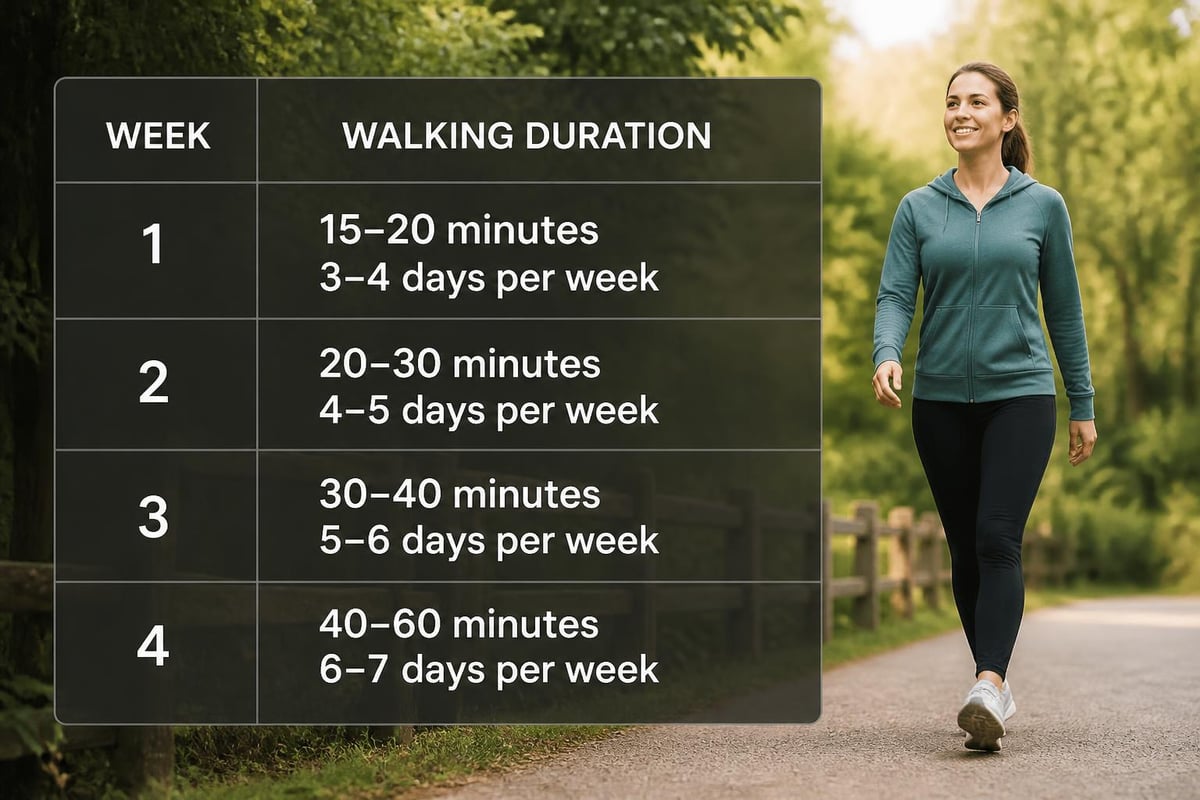
Recommended progression framework:
- Weeks 1-2: Walk 15 minutes daily at comfortable pace
- Weeks 3-4: Increase to 25 minutes daily, maintaining consistency
- Weeks 5-6: Extend to 35-40 minutes most days
- Week 7+: Aim for 45-60 minutes daily or split into two sessions
This gradual approach prevents the mental fatigue that leads to program abandonment while allowing your brain to adapt its metabolic expectations progressively.
Creating Mental Patterns That Support Walking Habits
The difference between temporary weight loss and lasting transformation lies in how deeply the behavior becomes embedded in your subconscious programming. Your brain operates through automated patterns for most daily activities, conserving conscious energy for novel challenges. When walking becomes one of these automated routines, it requires minimal willpower to maintain.
Environmental design plays a crucial role in supporting these mental patterns. Preparing your walking clothes the night before removes decision-making barriers that deplete mental resources. Placing your walking shoes by the door creates a visual trigger that prompts the desired behavior. These small modifications work with your brain's natural tendency to follow the path of least resistance.
Overcoming Mental Resistance and Self-Sabotage
Your subconscious mind may initially resist new walking routines through various forms of mental resistance. Common patterns include procrastination, excessive planning that delays action, or critical self-talk following missed sessions. These responses stem from neural programming designed to conserve energy and maintain familiar patterns, even when those patterns don't serve your current goals.
Recognizing resistance as a normal neurological response rather than personal failure changes your relationship with the process. When you miss a planned walk, your brain's negativity bias naturally amplifies the mistake, potentially triggering an "all or nothing" response that derails progress completely. The CDC emphasizes consistent physical activity rather than perfect adherence as the foundation for maintaining healthy weight.
Addressing resistance requires gentle redirection rather than forceful self-discipline. Speaking to yourself with the same compassion you'd offer a close friend creates neural pathways associated with safety and support rather than stress and punishment. This approach activates the parasympathetic nervous system, reducing cortisol and making behavior change feel more natural.
Combining Walking with Brain-Based Nutrition Changes
Walking to lose weight becomes exponentially more effective when paired with subconscious shifts in eating patterns. Traditional calorie restriction triggers survival responses in your brain that increase hunger signals and slow metabolism. Instead, focusing on reprogramming your relationship with food creates sustainable changes that don't activate these protective mechanisms.
Your brain associates certain foods with specific emotional states based on years of conditioning. Stress eating, for example, reflects deeply ingrained neural connections between negative emotions and high-calorie comfort foods. Walking provides an alternative stress-relief mechanism, gradually weakening these old associations while building new pathways that link movement with emotional regulation.
Key nutritional principles that support walking programs:
- Eat adequate protein to support muscle recovery and maintain satiety signals
- Focus on whole foods that provide stable energy rather than processed options causing blood sugar spikes
- Stay hydrated before, during, and after walks to optimize metabolic function
- Time larger meals at least 90 minutes before walking to prevent digestive discomfort
- Include post-walk nutrition within 30-60 minutes to support recovery and prevent excessive hunger later
Healthline's research on walking one hour daily demonstrates that combining walking with mindful eating patterns produces superior results compared to either approach alone.
Managing Stress and Emotional Eating
Walking serves as a powerful intervention for breaking the stress-eating cycle that undermines many weight loss attempts. When stress triggers activate your amygdala, your brain seeks immediate relief through behaviors associated with pleasure and comfort. For many people, this automatic response leads directly to eating high-calorie foods regardless of physical hunger.
Regular walking retrains your stress response system by providing an alternative pathway to emotional regulation. After consistent practice, your brain begins defaulting to movement rather than food when stress levels rise. This shift happens gradually as new neural pathways strengthen through repetition, eventually becoming as automatic as the old patterns you're replacing.

The rhythmic, bilateral nature of walking also activates both brain hemispheres in a coordinated pattern similar to EMDR therapy. This bilateral stimulation helps process stressful thoughts and emotions more effectively, reducing the mental burden that often triggers compensatory eating behaviors.
Tracking Progress Beyond the Scale
Your brain responds powerfully to feedback, but the type of feedback you prioritize determines whether you build sustainable motivation or create additional stress. Scale weight fluctuates based on numerous factors unrelated to fat loss, including hydration status, inflammation levels, hormonal cycles, and digestive contents. Obsessive scale monitoring can trigger anxiety responses that counteract the stress-reduction benefits of walking.
Instead, tracking behavioral metrics provides feedback that reinforces the identity shifts necessary for lasting change. Recording completed walks rather than pounds lost focuses your attention on the controllable actions that produce results. This approach activates your brain's reward system based on process adherence rather than outcome dependency.
Effective progress indicators to monitor:
- Number of walks completed weekly
- Average daily step count using simple pedometer apps
- Energy levels and sleep quality improvements
- Clothing fit changes and body measurements
- Mental clarity and mood stability enhancements
- Reduction in stress-eating episodes or food cravings
These markers reflect the comprehensive changes occurring in your brain and body, providing motivation through multiple channels rather than relying solely on weight fluctuations.
Building Long-Term Sustainability
The ultimate goal extends beyond reaching a target weight to creating a new baseline identity where walking and healthy choices feel natural rather than forced. Your brain constructs identity through accumulated evidence of behavior patterns. Each completed walk contributes to the neural narrative that defines you as someone who moves regularly and prioritizes health.
This identity-level change produces results that persist long after initial motivation fades. When walking becomes part of who you are rather than something you're forcing yourself to do, the behavior continues automatically even during challenging periods. The neuroscience principle of neuroplasticity confirms that your brain continually rewires based on consistent experiences, making permanent transformation entirely possible.
Social reinforcement accelerates this identity formation process. The American Council on Exercise highlights how community support and accountability structures enhance walking program success rates. Sharing your commitment with others creates external accountability while providing positive reinforcement that strengthens new neural pathways.
Advanced Techniques for Maximizing Results
Once basic walking habits become established, several advanced strategies can enhance both the physical and neurological benefits. Interval walking, which alternates between moderate pace and faster bursts, increases calorie expenditure while training your brain to associate walking with varied, engaging experiences rather than monotonous repetition.
Incorporating mindfulness or guided audio sessions during walks creates a multitasking opportunity that addresses both physical activity and mental reprogramming simultaneously. This combination maximizes limited time while reinforcing the connection between movement and mental clarity. Your brain processes the positive associations more deeply when multiple beneficial inputs occur together.
Advanced walking variations to consider:
- Hill or incline walking to increase intensity and metabolic challenge
- Backward walking briefly to engage different muscle groups and enhance balance
- Walking meditation focusing on breath coordination and present-moment awareness
- Nature walks in green spaces for additional stress reduction benefits
- Social walks with friends combining movement with connection and accountability
Adding variety prevents habituation, the process where your brain becomes so accustomed to an activity that it provides diminishing returns. Novel elements maintain engagement of your attention and reward systems, sustaining motivation through curiosity and interest rather than relying on discipline alone.
Addressing Plateaus and Adaptation
Your metabolism naturally adapts to consistent activity levels through a process called metabolic adaptation. After several weeks of regular walking, your body becomes more efficient, burning fewer calories for the same distance. This biological response can create frustrating plateaus where weight loss stalls despite continued effort.
Understanding this adaptation from a neuroscience perspective prevents the discouragement that typically derails progress. Your brain interprets plateaus through the lens of existing mental programming. If you maintain all-or-nothing thinking patterns, a plateau might trigger complete program abandonment. If you've developed resilience and long-term perspective, plateaus become expected temporary phases requiring minor adjustments.
Breaking through plateaus requires strategic changes that challenge your body's new equilibrium. Increasing duration, adding intensity variations, or incorporating strength training alongside walking prevents complete adaptation while building additional muscle tissue that elevates resting metabolic rate. These adjustments work best when implemented gradually, giving your brain time to accept and integrate the changes.
Making Walking Work With Your Lifestyle
Sustainability requires designing a walking program that fits seamlessly within your existing life structure rather than demanding complete schedule overhauls. Your brain resists dramatic changes to established routines, triggering stress responses that undermine implementation. Identifying small windows of opportunity within current patterns creates easier integration.
Morning walks before daily responsibilities begin offer advantages for many people. Cortisol naturally peaks in early morning hours, and walking helps regulate this hormone before it triggers cravings or stress-eating later in the day. Morning completion also eliminates the decision fatigue that accumulates throughout the day, preventing the common pattern of postponing walks until they simply don't happen.
Alternatively, walking during lunch breaks provides a reset point that divides your day while preventing the afternoon energy slump that often leads to excessive caffeine consumption or snacking. Evening walks serve as a decompression ritual that processes work stress before arriving home, reducing the likelihood of stress-eating during evening hours.
Practical integration strategies:
- Walk to local destinations instead of driving when possible
- Take phone calls while walking rather than sitting
- Use walking meetings for one-on-one work conversations
- Park farther from entrances to build steps into existing trips
- Walk while listening to podcasts, audiobooks, or music you enjoy
These micro-opportunities accumulate meaningful activity volume while requiring minimal schedule disruption, working with your brain's preference for familiar patterns rather than against it.
Walking to lose weight works best when you address both the physical activity and the mental programming that drives your choices. By understanding how your brain responds to movement, stress, and habit formation, you can design a sustainable approach that produces lasting results. If you're ready to reprogram your relationship with food and exercise at the subconscious level, Oneleaf offers neuroscience-based audio sessions that retrain your brain in just 10 minutes daily. When you change your brain, your body naturally follows.