Your mind controls every food choice you make, every craving you experience, and every habit that shapes your relationship with eating. Traditional weight loss approaches focus on willpower and restriction, but science shows that lasting change happens when you address the subconscious patterns driving your behavior. Weight loss hypnosis free resources have emerged as powerful tools for reprogramming these deep-seated mental patterns without financial barriers. By accessing the subconscious mind through guided audio sessions and self-hypnosis techniques, you can transform your eating habits at their neurological source rather than fighting against them with conscious effort alone.
Understanding the Neuroscience Behind Weight Loss Hypnosis
The human brain processes approximately 35,000 decisions daily, with most occurring automatically in the subconscious mind. Your eating behaviors, food preferences, and responses to stress are deeply embedded in neural pathways formed through years of repetition. When you try to change these patterns through willpower alone, you're essentially asking your conscious mind to override the autopilot system that controls 95% of your behavior.
Hypnosis works by accessing the subconscious mind during a state of focused relaxation, making it possible to introduce new suggestions and reframe existing beliefs about food, eating, and your body. This altered state of consciousness, characterized by increased suggestibility and reduced critical thinking, allows therapeutic suggestions to bypass the resistance that typically blocks behavioral change.
How Your Brain Creates and Maintains Eating Habits
Neural pathways strengthen through repetition, a process neuroscientists call synaptic plasticity. Every time you reach for comfort food when stressed, your brain reinforces the connection between emotional discomfort and eating. These pathways become highways of automatic behavior, explaining why changing eating habits through conscious effort feels so difficult.

Key brain mechanisms that hypnosis addresses:
- The amygdala's emotional responses to food cues and stress
- Dopamine reward systems that create cravings for specific foods
- Prefrontal cortex decision-making that weakens under cognitive load
- Habit loops stored in the basal ganglia
- Neural associations between emotions and eating behaviors
Weight loss hypnosis free programs target these specific brain mechanisms through carefully crafted suggestions. For example, self-hypnosis tracks designed by clinical hypnotherapists often include visualization techniques that activate the same neural regions involved in actual behavior, creating mental rehearsal that strengthens new pathways before you practice them in real life.
Accessing Quality Weight Loss Hypnosis Free Resources
The democratization of hypnotherapy through digital platforms has made professional-quality sessions available without financial investment. Understanding how to evaluate and select effective free resources ensures you receive genuine therapeutic benefit rather than generic relaxation recordings marketed as hypnosis.
Criteria for Effective Free Hypnosis Programs
Not all weight loss hypnosis free content provides the same therapeutic value. Professional hypnosis sessions incorporate specific elements based on established psychological principles and neuroscience research. When evaluating free resources, look for programs that clearly identify their theoretical foundation and provide structured progression rather than one-off sessions.
Essential components of effective hypnosis sessions:
- Induction phase that guides you into a relaxed, focused state
- Deepening techniques that enhance suggestibility
- Therapeutic suggestions aligned with specific behavioral goals
- Ego-strengthening elements that build confidence and self-efficacy
- Post-hypnotic suggestions that trigger new behaviors in daily life
- Awakening phase that returns you to normal consciousness feeling refreshed
Many platforms offer weight loss hypnosis apps with free introductory sessions that demonstrate professional quality. These initial sessions provide insight into the methodology and allow you to assess whether the approach resonates with your personal preferences and goals.
Types of Free Hypnosis Formats Available
The digital landscape offers weight loss hypnosis free content in various formats, each with distinct advantages for different learning styles and schedules. Audio sessions remain the most common format, ranging from 10-minute targeted interventions to hour-long comprehensive programs.
Available formats include:
- Guided audio sessions for daily practice (10-30 minutes)
- Sleep hypnosis recordings that work while you rest (45-90 minutes)
- Self-hypnosis training that teaches you to induce the state independently
- Video-guided sessions that combine visual and auditory elements
- Written scripts for those who prefer reading and self-guidance
Resources like nighttime weight loss hypnosis sessions leverage the natural relaxation that occurs before sleep, when your brain transitions into theta wave states naturally conducive to suggestion. This timing maximizes effectiveness without requiring additional time commitment during your busy day.
Implementing Weight Loss Hypnosis into Your Daily Routine
Consistency determines success with any brain-retraining program. Unlike diet programs that require constant vigilance around food choices, weight loss hypnosis free practices work best when integrated into existing routines as non-negotiable self-care rituals rather than optional activities squeezed into spare moments.
Creating Your Hypnosis Practice Schedule
The subconscious mind responds to repetition and routine. Establishing a consistent time and place for hypnosis practice signals to your brain that this activity holds importance, increasing engagement and receptivity. Most neuroscience research suggests that 21-30 days of consistent practice begins to establish new neural patterns, while 90 days typically solidifies these changes into automatic behaviors.
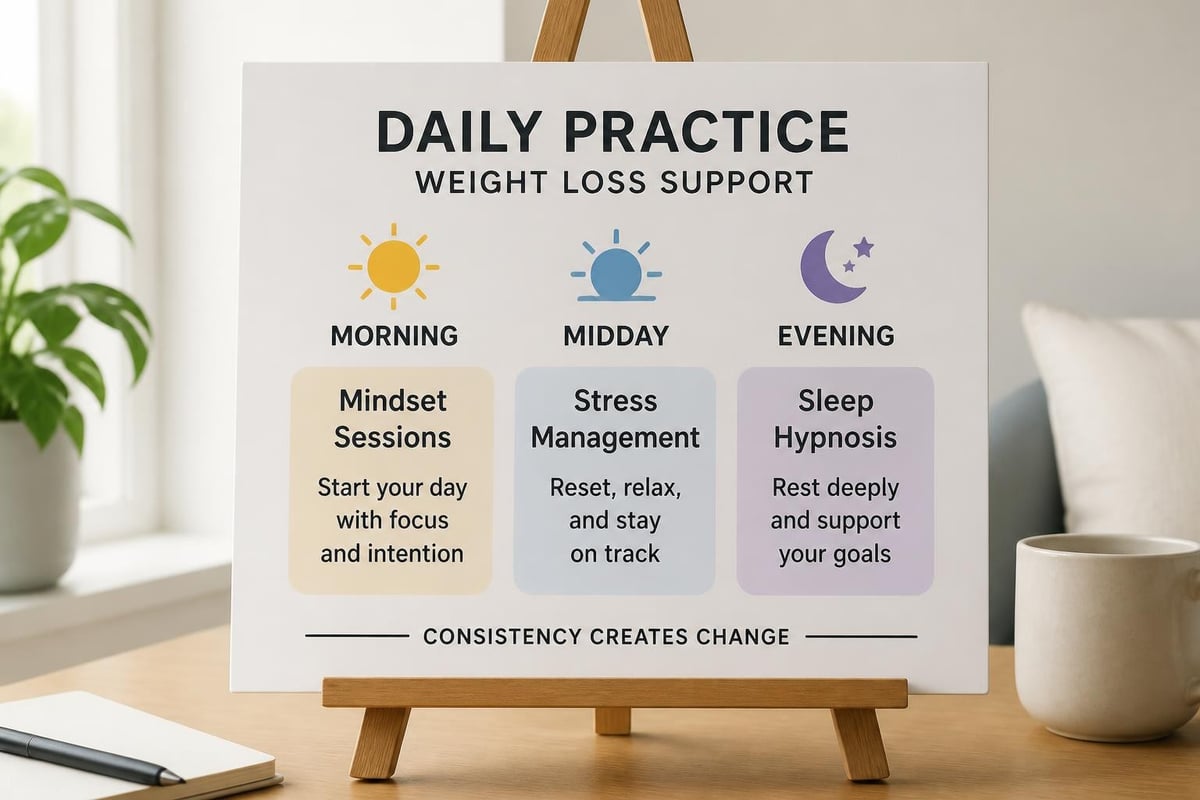
Recommended practice patterns:
- Morning sessions (10-15 minutes): Set intentions and program your mindset before daily challenges arise
- Midday resets (5-10 minutes): Manage stress and prevent emotional eating triggers
- Evening practice (15-30 minutes): Process the day and reinforce positive patterns before sleep
- Weekly intensive sessions (30-60 minutes): Deeper work on specific challenges or limiting beliefs
Many people find success using apps that provide daily hypnosis sessions specifically designed for progressive behavioral change. These platforms typically structure content to address different aspects of weight loss across a multi-week program, ensuring comprehensive coverage of the psychological factors involved.
Maximizing the Effectiveness of Free Sessions
The quality of your hypnosis experience depends significantly on environmental factors and mental preparation. Creating optimal conditions for practice amplifies the impact of even brief sessions, allowing suggestions to penetrate deeply into your subconscious mind.
Preparation strategies:
- Choose a quiet, comfortable space where interruptions are unlikely
- Use headphones to enhance audio quality and minimize distractions
- Practice at consistent times when you're alert but relaxed (avoid extreme fatigue)
- Set clear intentions before each session about what you want to achieve
- Maintain a practice journal to track insights, resistance, and progress
- Allow sessions to complete without checking time or rushing the process
Your conscious mind may initially resist suggestions that conflict with established beliefs about yourself, food, or weight loss. This resistance manifests as skepticism, distraction, or the impulse to dismiss the practice as ineffective. Recognizing resistance as a normal protective mechanism rather than evidence that hypnosis won't work for you allows you to persist through the initial adjustment period.
Addressing Common Obstacles and Misconceptions
Despite growing acceptance of hypnotherapy as a legitimate therapeutic tool, misconceptions about hypnosis persist. These misunderstandings often prevent people from accessing helpful weight loss hypnosis free resources or cause them to approach the practice with expectations that undermine effectiveness.
Debunking Hypnosis Myths That Block Success
Myth 1: Hypnosis is mind control Reality: Hypnosis is a collaborative process where you remain aware and in control. You cannot be made to do anything against your values or desires. The hypnotist or recorded session simply guides you into a state where you're more receptive to suggestions you've chosen to receive.
Myth 2: Only weak-minded people can be hypnotized Reality: Hypnotic susceptibility correlates with imagination, focus ability, and willingness to engage with the process. Intelligence and strong willpower actually enhance your ability to benefit from hypnosis because you can more effectively direct your mental resources.
Myth 3: You might not wake up from hypnosis Reality: Hypnosis is a natural state similar to daydreaming or the moments before sleep. You naturally return to normal consciousness either when guided by the session or when external factors interrupt the state.
Myth 4: Results happen instantly without effort Reality: While some people experience immediate shifts in perception or behavior, lasting change typically requires consistent practice over weeks or months as new neural pathways strengthen and old ones weaken.
Programs like those offered through transformative hypnosis audio platforms emphasize the gradual, cumulative nature of subconscious reprogramming. This realistic framing helps users maintain motivation during the initial weeks when conscious awareness of change may be subtle even as deep neurological shifts occur.
Working Through Practice Challenges
Even committed practitioners encounter obstacles that temporarily disrupt consistency or reduce session effectiveness. Anticipating these challenges and developing strategies to address them prevents minor setbacks from derailing your entire practice.
Common challenges and solutions:
- Falling asleep during sessions: Practice at times when you're alert, or use sleep hypnosis intentionally at bedtime
- Racing thoughts preventing relaxation: Use longer induction phases or practice brief breathing exercises before starting
- Doubts about whether you're "doing it right": Release the need to achieve a specific experience; trust the process and focus on consistency
- Impatience with pace of results: Track non-scale victories like reduced cravings, improved mood, or easier stress management
- Difficulty maintaining daily practice: Start with just 5 minutes daily rather than attempting longer sessions you'll skip
Resources offering free guided weight loss hypnosis sessions typically include troubleshooting guidance and community forums where practitioners share solutions to common obstacles. This support infrastructure significantly increases long-term adherence compared to isolated practice.
Combining Hypnosis with Neuroscience-Based Lifestyle Changes
Weight loss hypnosis free programs deliver maximum impact when integrated with complementary practices that support brain health and optimize conditions for neuroplasticity. Your subconscious mind absorbs and implements suggestions more effectively when your conscious lifestyle aligns with your hypnotic goals.
Nutrition Strategies That Support Brain Reprogramming
The foods you consume directly influence neurotransmitter production, inflammation levels, and blood sugar stability-all factors that affect your brain's receptivity to new patterns and your ability to maintain emotional equilibrium during change.
Brain-supportive nutrition principles:
- Omega-3 fatty acids support neural membrane health and reduce inflammation that impairs neuroplasticity
- Protein at each meal stabilizes blood sugar and provides amino acids for neurotransmitter synthesis
- Antioxidant-rich foods protect neurons from oxidative stress that damages cellular function
- Hydration maintains optimal brain volume and supports waste removal through the glymphatic system
- Minimal processed foods reduces blood sugar spikes that trigger cravings and impair decision-making
Rather than following restrictive diets that activate stress responses and sabotage subconscious reprogramming, approach nutrition as fuel for the brain change you're cultivating through hypnosis. This mindset shift transforms eating from a battleground into a supportive practice.
Movement and Stress Management Practices
Physical activity and stress reduction techniques create the optimal neurochemical environment for consolidating the new patterns suggested during hypnosis sessions. Exercise increases brain-derived neurotrophic factor (BDNF), essentially fertilizer for neural growth and connection formation.

Complementary practices:
- Daily movement (20-30 minutes): Walking, yoga, dancing, or any enjoyable activity
- Breathing exercises (5-10 minutes): Activates parasympathetic nervous system and enhances stress resilience
- Mindfulness meditation (10-15 minutes): Strengthens awareness of thoughts and impulses before acting on them
- Adequate sleep (7-9 hours): Consolidates learning and allows brain cleaning processes to remove metabolic waste
- Social connection: Reduces stress hormones and provides accountability and encouragement
Many free weight loss hypnosis downloads incorporate suggestions that reinforce these complementary practices, creating a comprehensive approach to behavior change that addresses multiple factors simultaneously rather than relying on hypnosis alone.
Measuring Progress Beyond the Scale
Traditional weight loss programs fixate on numerical measurements, creating psychological stress that actually impairs the brain's ability to change. When you're anxiously checking the scale daily and judging your worth based on fluctuations driven by water retention, hormones, and inflammation rather than fat loss, you activate stress responses that undermine your efforts.
Tracking Neurological and Behavioral Shifts
The most meaningful indicators of successful brain reprogramming appear in changed thoughts, emotions, and automatic behaviors long before they translate into significant weight loss. Recognizing and celebrating these shifts maintains motivation during the weeks or months required for physical changes to manifest.
Evidence of successful subconscious reprogramming:
- Reduced frequency and intensity of cravings for specific foods
- Increased awareness of hunger and fullness cues
- Greater ease stopping eating when satisfied rather than stuffed
- Improved emotional regulation without turning to food
- Enhanced energy levels and sleep quality
- Spontaneous preference for healthier food choices
- Reduced anxiety or obsessive thoughts about food and weight
- Stronger sense of self-efficacy and control
Maintaining a detailed practice journal allows you to document these subtle shifts that might otherwise go unnoticed. When you review entries from weeks earlier, you'll often discover significant changes in your relationship with food and eating that developed so gradually you didn't consciously register them.
Understanding the Non-Linear Nature of Change
Your brain doesn't change in a straight line from old patterns to new ones. Neuroplasticity involves periods of rapid progress, plateaus where change continues invisibly, and occasional regression when stress or life disruption temporarily reactivates old neural pathways. This natural variation confuses people who expect consistent forward movement and interpret plateaus or setbacks as failure.
Phases of brain-based change:
- Initial enthusiasm (Weeks 1-2): Novelty activates reward systems, creating motivation and often immediate positive experiences
- Resistance period (Weeks 3-4): Old patterns fight back as your brain questions the new approach
- Integration phase (Weeks 5-8): New patterns begin feeling more natural as neural pathways strengthen
- Consolidation (Weeks 9-12): Changes become increasingly automatic with less conscious effort required
- Mastery (Months 4-6): New patterns dominate, old triggers lose power, sustainable change established
Understanding this timeline prevents premature abandonment of practice during the resistance or plateau phases. Resources offering combined weight loss and sleep hypnosis support progress through multiple mechanisms, addressing both conscious behavior change and the overnight consolidation processes that cement new learning.
Personalizing Your Weight Loss Hypnosis Approach
Individual differences in learning style, psychological needs, and specific weight loss challenges mean that no single hypnosis program works optimally for everyone. Weight loss hypnosis free resources provide the opportunity to experiment with various approaches, voices, techniques, and session structures until you discover what resonates most powerfully with your unique brain and circumstances.
Identifying Your Subconscious Triggers and Patterns
Effective hypnosis suggestions target your specific mental and emotional patterns rather than generic weight loss obstacles. Before selecting programs or creating your practice structure, invest time identifying the particular thoughts, beliefs, emotions, and situations that drive your eating behaviors.
Reflection questions to guide program selection:
- What emotions most frequently trigger overeating or unhealthy food choices?
- What beliefs about yourself, food, or weight loss create resistance to change?
- What time of day do you struggle most with food decisions?
- What environmental cues or situations activate cravings or mindless eating?
- What past weight loss attempts failed, and what psychological factors contributed?
Your answers reveal whether you need hypnosis content focused primarily on stress management, emotional regulation, self-esteem building, breaking specific habit loops, or addressing trauma-related eating patterns. This targeted approach produces faster, more sustainable results than generic sessions addressing weight loss broadly.
Adapting Practice Intensity to Your Current Capacity
Your available time, mental bandwidth, and readiness for change fluctuate based on life circumstances. Rather than maintaining rigid practice expectations that set you up for perceived failure, adjust your hypnosis routine to match your current capacity while maintaining consistency as the non-negotiable element.
Flexible practice frameworks:
- Intensive phase: Daily 20-30 minute sessions plus sleep hypnosis when you have capacity for focused change work
- Maintenance phase: Daily 10-minute sessions when life demands limit available time
- Minimal commitment phase: 5-minute daily practice or even just listening to sleep hypnosis to maintain connection during extremely busy or stressful periods
The key principle is never allowing perfection to become the enemy of progress. A brief session practiced consistently provides more neurological benefit than longer sessions you abandon after a few weeks because the time commitment feels unsustainable.
Weight loss hypnosis free resources offer a scientifically-grounded pathway to sustainable change by addressing eating behaviors at their neurological source rather than relying on willpower and restriction. When you're ready to experience comprehensive brain reprogramming designed specifically for weight loss, Oneleaf combines neuroscience, behavioral psychology, and self-hypnosis in daily 10-minute sessions that make healthy choices automatic. The app guides you through a structured program that reduces cravings, manages stress, and rewires the mental patterns driving overeating-creating lasting results without diets, guilt, or constant effort.